

What if you could eliminate that dangerous trip hazard on your sidewalk or the pooling water near your foundation without the week-long mess of a full concrete replacement? Many homeowners in Little Rock, Conway, and Hot Springs face a similar dilemma when they notice their driveway sinking or garage floor cracking. You likely already know that ignoring these structural shifts can lead to expensive foundation issues, yet the uncertainty regarding the cost of polyurethane concrete lifting often makes it tempting to delay the repair.
We understand that your home is your most significant investment, and seeing it settle into Arkansas’s challenging shrink-swell clay soil can be stressful. This guide will help you discover the specific factors that influence the price of professional foam leveling and why this method remains the most cost-effective alternative to a new pour. It’s a clean, stable fix. We’ll explore how modern high-density foam provides a permanent, lightweight solution that won’t wash away like traditional mudjacking. By the end of this article, you’ll have a clear understanding of how to achieve a safe, level surface and protect your property value with a process that’s as efficient as it is durable.
Every concrete repair project is unique because the ground beneath your home is constantly shifting. When assessing the cost of polyurethane concrete lifting, most homeowners start by looking at the size of their driveway or patio. While the surface area provides a baseline, professional estimators look deeper to understand the full scope of the stabilization required. The goal is to create a permanent fix that addresses the root cause of the settlement rather than just masking the symptoms.
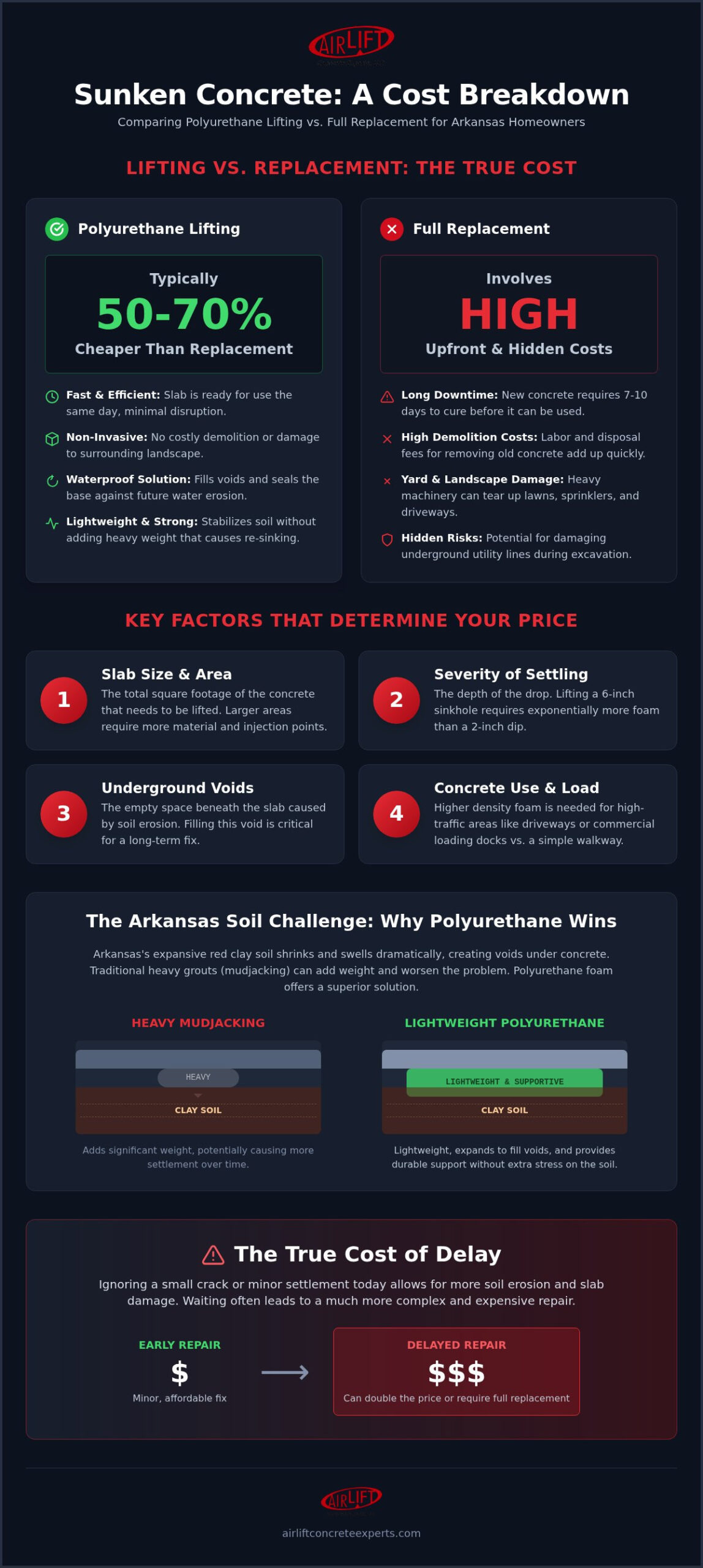
The square footage of your slab dictates how many injection points our technicians must create. A larger surface area naturally requires more time and material, but the severity of the settlement is often the more significant variable. For instance, lifting a sidewalk that has dropped two inches requires far less material than a driveway section that has sunk six inches. The volume of foam needed increases exponentially with the depth of the drop. Additionally, the thickness of the concrete plays a role. A heavy, four-inch thick residential slab requires more lifting pressure and higher-density material than a thinner decorative walkway. Our team evaluates these physical dimensions to ensure the lift is precise and controlled.
The most critical factor in your estimate is often invisible from the surface. Before we can lift the concrete, we must fill the “void” or empty pocket created by eroding soil. In Central Arkansas, our heavy rains often wash away the sub-base, leaving a hollow space that must be fully supported to prevent future cracking. This process is a core part of modern concrete leveling techniques.
Stabilizing the loose soil beneath the slab is essential to prevent the concrete from sinking again during the next rainy season. Professional-grade polyurethane foam is engineered for high-volume expansion and structural integrity, which distinguishes it from hardware store spray foams. These specialized materials react and expand rapidly, filling every crevice of the void to create a solid, waterproof foundation. Because the foam is lightweight, it doesn’t add significant stress to the already compromised soil, unlike traditional mudjacking methods that use heavy grout.
Finally, the weight of the structure determines the specific density of the foam required. Lifting a pool deck involves different technical requirements than stabilizing a heavy garage floor where a vehicle is parked. By evaluating these factors together, we ensure the repair isn’t just a temporary patch but a long-term stabilization of your property’s value.
When you see a sunken driveway or a tilted patio, your first thought might be to tear it out and start over. However, the total cost of demolition, removal, and disposal of old concrete often catches property owners by surprise. Choosing polyurethane concrete leveling is typically 50-70% cheaper than full replacement because it utilizes the structural integrity already present in your existing slab. By lifting the concrete instead of replacing it, you avoid the high labor costs of hauling away tons of debris to a landfill. When evaluating the cost of polyurethane concrete lifting, it’s essential to look at the total project lifecycle rather than just the initial invoice.
A new concrete pour involves more than just the price of the material. Most traditional projects require local permits and the rental of heavy machinery that can tear up your yard. You also have to factor in the “downtime” cost. A new driveway requires a cure time of seven to ten days before you can park a vehicle on it, forcing you to park on the street or disrupt your daily routine. There is also the risk of damaging underground utilities during the excavation process. Excavators and skid steers are powerful tools; even a small mistake can lead to broken water lines or severed electrical conduits. Often, the landscaping restoration costs needed after the heavy equipment leaves are completely ignored in initial quotes for new concrete.
The long-term value of foam injection goes beyond the immediate savings. Polyurethane is naturally moisture-resistant, which means it won’t wash out during the heavy spring rains common in Central Arkansas. This durability prevents the “washout” cycle that causes slabs to sink again. Polyjacking is a permanent soil stabilization method that uses high-density foam to consolidate loose soil and fill underground voids. By addressing these issues now, you prevent water from pooling near your home, which protects your foundation from expensive drainage problems. If you’re weighing your options, a free initial assessment can help you determine if your slab is a candidate for lifting before you commit to a full demolition.
National pricing guides often fail to account for the unique geological challenges we face in the Natural State. In our region, the earth beneath your home isn’t just dirt; it’s a living, moving foundation. Arkansas is notorious for its dense red clay, which behaves like a sponge. When you consider the cost of polyurethane concrete lifting, you must factor in how this soil dictates the technical requirements of the job. Our local weather patterns, characterized by high Central Arkansas humidity and intense seasonal rains, create an environment where soil erosion and settlement are almost inevitable for many property owners.
Property owners in Malvern and Benton frequently see their concrete shift during the transition from a dry summer to a wet winter. This is due to the “shrink-swell” cycle. During the hot months, the clay loses moisture and pulls away from the concrete, creating massive underground voids. When the rains return, the soil expands rapidly, exerting significant hydrostatic pressure against the slab. If the soil has eroded, the concrete has nowhere to rest, leading to the ugly cracks and uneven surfaces you see on your driveway.
High-density polyurethane foam acts as the perfect counter-measure for this shifting clay. Because the foam is lightweight, it doesn’t add more weight to the already struggling soil, yet it’s strong enough to stabilize the slab against future movement. When you search for foundation repair near me, it’s vital to find a partner who understands these specific soil behaviors. A contractor who doesn’t account for clay expansion might provide an estimate that only solves the problem for a single season.
Logistics also play a role in your final estimate. For example, homes in the hilly terrain of Hot Springs or Hot Springs Village often present accessibility challenges for heavy equipment. Our specialized foam injection systems are compact and versatile, allowing us to reach difficult areas without damaging your landscaping. Choosing a professional foundation repair team with a local presence in Little Rock and Conway also helps keep costs manageable. By maintaining a strong regional footprint, we can reduce mobilization fees for residents in Cabot and Jacksonville. This local expertise ensures that your quote is based on the actual environmental conditions of your specific neighborhood, rather than a generic national average.
The scale of a concrete repair project significantly influences the technical approach and the materials required. While a residential driveway and a commercial warehouse floor might both suffer from settlement, the structural demands placed on those slabs are worlds apart. When evaluating the cost of polyurethane concrete lifting, it is vital to distinguish between standard residential needs and high-capacity industrial requirements. Residential projects typically focus on restoring safety and curb appeal, whereas commercial applications prioritize structural load-bearing capacity and operational continuity.
Most residential requests involve sunken front walkways, patios, or driveways. These slabs are generally four inches thick and designed to support foot traffic or passenger vehicles. One of the more complex residential tasks is pool deck leveling. This requires extreme precision to ensure the slab returns to its original position without putting stress on the pool liner or plumbing. Because residential slabs are relatively light, technicians can often complete these lifts in just a few hours. The process is clean and quiet, allowing you to use your outdoor space almost immediately after we finish the injection. This efficiency makes foam lifting a preferred choice for homeowners who want to avoid the noise and mess of a week-long construction project.
Commercial environments like loading docks, warehouse floors, and retail parking lots face much harsher conditions. These slabs must support the weight of heavy machinery, forklifts, and delivery trucks. Consequently, commercial concrete lifting often requires specialized, high-density foams engineered specifically for heavy industrial loads. These materials are formulated to resist compression under thousands of pounds of constant pressure.
Business owners also have different priorities regarding timing. We often utilize a “night-shift” lifting advantage to minimize business interruption, performing the repair while the facility is closed so that operations can resume at full capacity the next morning. Beyond structural stability, commercial projects often address critical safety hazards and ADA compliance issues. An uneven sidewalk at a storefront isn’t just an eyesore; it’s a significant liability. Large-scale industrial quotes are structured to account for these higher material densities and the precision required to keep a facility running smoothly. If you manage a local business and need to address a tripping hazard, you can schedule a professional assessment to see how specialized foam stabilization can protect your bottom line.
Waiting for a “better time” to fix a sunken driveway might seem like a way to save money, but it usually has the opposite effect. A small settlement is often just the beginning of a total slab failure. When a section of concrete begins to tilt, it creates internal stress that eventually leads to deep, structural cracks. Once the slab breaks into multiple smaller pieces, the repair becomes significantly more difficult. The cost of polyurethane concrete lifting is fundamentally linked to the volume of material required for the job. As the void beneath your concrete grows due to ongoing soil erosion, the amount of foam needed to stabilize the area increases, which naturally raises the final estimate.
Beyond the physical damage to the concrete, safety is a hidden expense that many homeowners overlook. A one-inch ledge on a sidewalk or front walkway is a major trip hazard for family, neighbors, and delivery drivers. The potential liability of a “trip and fall” incident on your property far outweighs the investment of a professional repair. Addressing these hazards early ensures your property remains a safe environment while protecting you from unexpected legal or insurance complications.
Sunken concrete often acts as a funnel that directs rainwater toward your home’s perimeter instead of away from it. When a driveway or patio tilts toward the house, it saturates the soil near your foundation, which can lead to water intrusion in crawl spaces or basements. Searching for polyjacking near me is a vital preventative measure for any Central Arkansas homeowner. Our specialized high-density polyurethane foam creates an impermeable water barrier that prevents future erosion by sealing the underside of the slab. This barrier stops the cycle of “washout” and protects your home’s most critical structural components from moisture damage.
First impressions matter, especially if you ever decide to sell your home. “Ugly” or cracked concrete is a major red flag during a home appraisal and can significantly lower your resale value. Buyers often view uneven driveways as a sign of neglect, leading them to wonder what other structural issues might be hidden. Proactive maintenance is always more affordable than emergency structural repair. Our team provides a free initial assessment to help you identify these problems before they scale into a much larger project. By choosing to act now, you stabilize your home’s value and ensure your property remains a source of pride rather than a source of stress.
Choosing to address sunken concrete now is an investment in your home’s long-term health. You’ve learned how polyurethane foam provides a lightweight, moisture-resistant alternative to the high expenses of full demolition and replacement. By understanding the unique challenges of Arkansas red clay, you can make an informed decision that stops erosion and protects your foundation from water damage.
Since 2017, our family-owned team has used specialized high-density polyurethane foam technology to deliver reliable results across Little Rock, Conway, and Hot Springs. We prioritize transparency, ensuring you understand every factor that influences the cost of polyurethane concrete lifting for your specific project. Our goal is to transform your structural concerns into a sense of lasting security by being a stable partner in your property maintenance.
Request Your Free Concrete Lifting Estimate from Airlift Experts and take the first step toward a safe, level surface today. We look forward to helping you protect your home with the professional care and regional expertise your property deserves.
Polyurethane lifting typically has a higher initial price point than mudjacking because the materials are more advanced. However, mudjacking uses a heavy slurry that often sinks again in Arkansas red clay. Because foam is waterproof and lightweight, it provides a permanent fix that prevents the need for future repairs. When you evaluate the long-term cost of polyurethane concrete lifting, the durability of foam makes it the more economical choice for property owners.
Most standard homeowner’s insurance policies don’t cover concrete leveling because settlement is considered a maintenance issue. Coverage is typically reserved for sudden, accidental damage like a burst pipe or a storm. It’s always best to consult with your local insurance agent in North Little Rock or Jacksonville to review your specific policy details. We provide detailed assessments that you can share with your provider to see if any secondary damage qualifies for a claim.
Polyurethane foam is designed to last for the lifetime of the concrete slab itself. Unlike traditional fill materials, high-density foam is chemically inert and waterproof, so it won’t rot or wash away during intense Central Arkansas rainy seasons. This longevity is especially beneficial in places like Hot Springs Village, where steep slopes and heavy runoff often compromise older repair methods. Once the foam cures, it remains a stable, permanent support structure beneath your walkway or pool deck.
We don’t recommend or sell DIY repair kits because they lack the structural integrity required for permanent stabilization. Professional-grade high-density foam requires specialized equipment to maintain the correct temperature and pressure during the injection process. Off-the-shelf spray foams found at hardware stores are designed for insulation, not for supporting the weight of a concrete driveway. Using an inadequate material can actually make the settlement worse and increase your eventual professional repair expenses.
A single injection point can lift several square feet of concrete depending on the depth of the void and the thickness of the slab. Our technicians use a methodical grid pattern to ensure the lift is perfectly even across the entire surface. The foam expands rapidly to fill every underground crevice before providing the upward pressure needed for the lift. This controlled expansion allows us to restore large sections with minimal disruption to the property.
The foam injection process is remarkably clean and won’t damage your lawn or landscaping. We only need to drill small holes, roughly the size of a penny, directly through the concrete. Our equipment is housed in a single truck that stays on the street or driveway, so we don’t have to drive heavy machinery across your grass in Cabot or Conway. Once the job is finished, we seal the injection holes with a matching concrete grout for a seamless look.
Most professional contractors in Central Arkansas establish a minimum project fee to cover the logistics of bringing specialized equipment and a trained crew to your site. This ensures that even small repairs, like a single sidewalk panel in Benton, receive the same level of technical precision as a large commercial warehouse. While we don’t list specific dollar amounts, our free initial assessment provides a clear, transparent quote tailored to the unique structural needs of your specific neighborhood.
You can typically drive on your concrete just 15 to 30 minutes after the injection process is complete. Polyurethane foam reaches 90% of its full structural strength almost instantly, which is a massive advantage over the week-long wait times required for new concrete pours. This rapid cure time is perfect for busy families in Little Rock who need immediate access to their garage or driveway. You won’t have to worry about neighborhood traffic or pets ruining a wet surface.

 Call Now