
Replacing an uneven driveway isn’t always the best fix. If the concrete is still serviceable and the settlement is limited, leveling may restore the surface without removing the entire driveway; widespread damage may call for more extensive work. The problems caused by uneven driveways go beyond a rough ride: they can affect drainage, the soil beneath the slab, and vehicle clearance.
A low spot that holds rainwater or a raised edge that catches a tire can be frustrating, and it’s natural to wonder whether the whole driveway needs replacing. The right choice depends on what’s moving beneath the surface and how much of the driveway is affected. This guide explains how uneven concrete can redirect water, worsen settlement, and create bumps that challenge tires and vehicle undercarriages. You’ll also learn which signs point toward leveling rather than replacement, so you can understand the problem before deciding what repair makes sense.
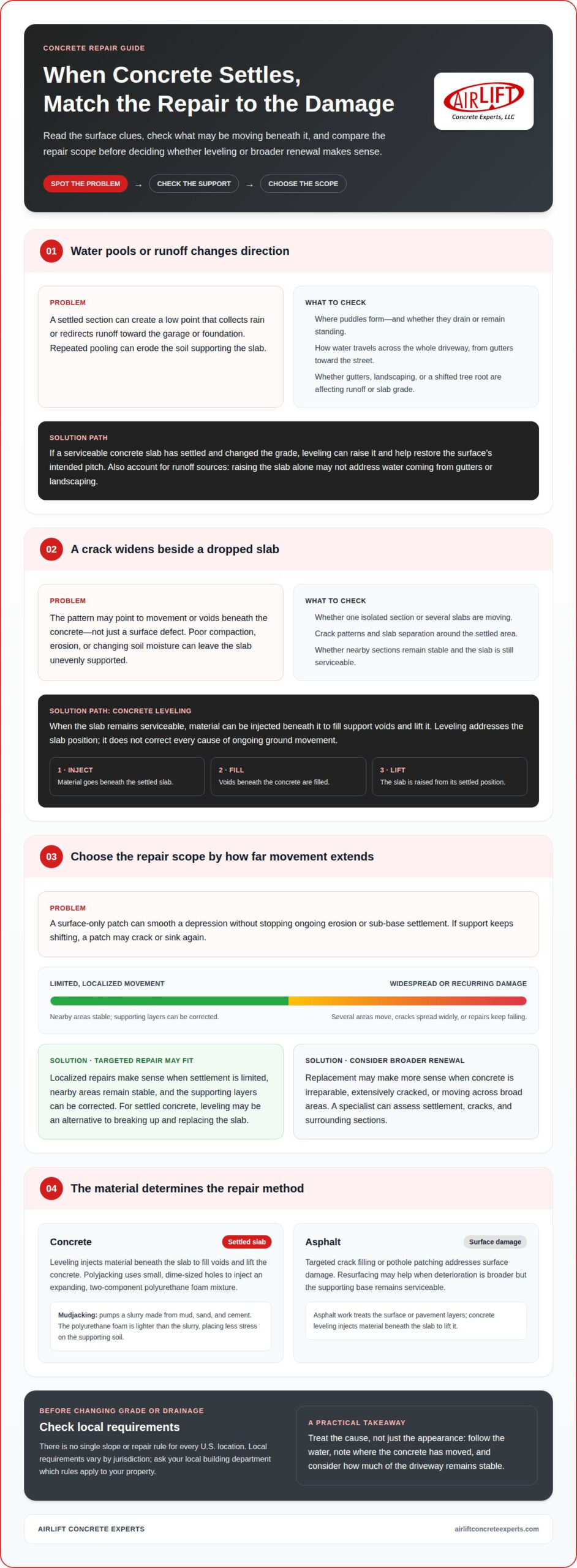
Repair small cracks before water gets beneath the surface. In asphalt, water can weaken the base and separate supporting materials; freezing water can widen cracks and contribute to potholes. In concrete, rain entering a crack can loosen the soil beneath a settled slab. For example, a narrow crack beside a growing dip deserves attention before vehicle traffic makes the damage more pronounced.
There isn’t one slope or repair rule that applies throughout the United States; local requirements vary by jurisdiction. Before changing driveway grading or drainage, ask your local building department which rules apply to your property.
The right driveway repair depends on the material and extent of movement. For asphalt, targeted crack filling or pothole patching addresses surface damage, while resurfacing may help when deterioration is broader but the supporting base remains serviceable. For concrete, leveling can fill voids beneath settled slabs and lift them. A specialist can assess the settlement, cracks, and surrounding sections to determine whether a repair addresses the cause, not just the appearance.
Localized repairs make sense when settlement is limited, nearby areas remain stable, and the supporting layers can be corrected. Broader renewal may be appropriate when several areas move, cracks spread widely, or repairs keep failing. A surface-only patch can smooth a depression, but it won’t stop ongoing erosion or sub-base settlement. If the support keeps shifting, the patch may crack or sink again.
Homeowners can handle limited surface maintenance, such as clearing debris from cracks, but lifting a settled slab requires locating and filling support voids. Improper patching can leave a poor slope, trap water, or conceal movement; lifting concrete without suitable equipment can also create uneven support. For example, filling a low concrete section without correcting its support may leave the dip in place. Repair methods vary: asphalt work treats the surface or pavement layers, while concrete leveling injects material beneath the slab to lift it.
A driveway’s slope determines where rainwater flows. When a concrete section settles, it can create a low point that repeatedly collects water or redirects runoff toward a garage or foundation. For example, water that once flowed toward the street may pool beside the garage after a slab drops. Note where puddles form after rain and whether they drain or remain standing.
Nearby features can change drainage patterns over time. Gutters that discharge onto the driveway may concentrate water at one edge, while landscaping can trap runoff beside a low section. A large tree root can shift a slab upward or change its grade. Roots can also draw moisture from soil, leaving voids beneath concrete. These changes can combine: a root-disturbed edge and trapped runoff may direct water toward the garage.
Watch how water moves across the whole surface, not just where one puddle forms. A dip near the driveway entrance may hold rain; a settled section beside the house may guide runoff toward the foundation. Repeated pooling matters because water can erode the soil supporting a slab. As support weakens, uneven surfaces may develop or worsen, changing the path of later rainfall. Keep the driveway clear of debris so water can flow along its intended route.
When planning repairs, account for the finished slope and the surrounding drainage. Filling a depression without correcting continued settlement may leave the same pooling pattern. If a settled concrete slab has altered the grade, concrete leveling for settled slabs can raise it and help restore the surface’s intended pitch. Leveling addresses the slab position, while runoff sources such as gutters or landscaping may also need attention. Tracing the water’s route from gutter to street helps identify whether the main issue is grading, a blocked path, or movement beneath the driveway.
A driveway’s stability depends on the ground supporting its concrete slabs. Poor preparation or soil movement can cause sections to settle at different rates.
A poorly compacted driveway base contains loose soil or gravel beneath the concrete instead of a firm, even support layer. Inadequate excavation or compaction during construction can leave voids that later allow slabs to sink. For example, one wheel path may settle while the driveway edges remain higher. Uneven support can contribute to cracks, slab separation, and further movement as vehicles cross the weakened area.
Sub-base failure occurs when the supporting layer beneath concrete can no longer hold the slab evenly. Poor compaction can start the problem, while erosion or changing soil moisture may make it worse. A crack widening beside a dropped slab can indicate movement below, rather than a surface-only defect. The pattern matters: one isolated section suggests a different repair scope than several slabs moving together.
Concrete leveling can be an alternative to breaking up and replacing settled concrete when the slab remains serviceable. The process injects material beneath the slab to fill voids and lift it. Polyjacking uses small, dime-sized holes to inject a two-component polyurethane foam mixture that expands beneath the concrete. Mudjacking instead pumps a slurry made from mud, sand, and cement. The foam is lighter than the slurry, placing less stress on the supporting soil.
Replacement may make more sense when concrete is irreparable, extensively cracked, or moving across broad areas. Leveling addresses settled slabs, but it doesn’t correct every cause of ground movement. For example, if recurring moisture changes continue to shift expansive soil, the support may keep changing. Look at crack patterns, slab separation, and whether nearby sections remain stable. These signs help distinguish local settlement from wider movement and clarify whether targeted lifting or broader renewal better suits the driveway.
A settled section can make vehicles climb, drop, or strike the pavement. Repeated impacts may affect tires, suspension, and clearance.
Tire wear and underside contact can result when uneven slabs repeatedly jolt a vehicle or create abrupt height changes. A dropped edge can scrape a low-clearance car’s undercarriage, potentially striking components such as the exhaust system, oil pan, or transmission. Repeatedly crossing one depression may also affect wheel alignment and tire wear. If your vehicle starts pulling or shaking after the same rough approach, note where the impact occurs.
Routine impacts from bumps and dips can put stress on a vehicle’s frame and suspension. Shocks, struts, and springs absorb those impacts, and prolonged strain can contribute to faster wear. For example, a vehicle that repeatedly drops off a raised slab may bounce or jolt at the same point. Continued stress can also affect the frame or body, contributing to misalignment or structural damage.
Traffic patterns can make a weak area deteriorate further. Turning, braking, or repeatedly crossing one spot concentrates force there; heavier vehicles can add more load. If the soil beneath a slab is already weak, continued use can deepen or widen the depression. Moisture entering the support area may also contribute to erosion, allowing further sinking and movement. Note whether the same tire path crosses the damaged section on every trip.
Standing water near a low spot can make the route harder to read, especially when the surface hides a sudden drop. Approach slowly and avoid repeatedly driving across a visibly unstable section when another safe route is available. Continued vehicle traffic can make the weak area’s deformation more pronounced. Addressing the slab’s position can reduce the jolt that prompted concern.
If a sunken concrete section is affecting vehicle clearance, arrange an assessment of driveway leveling to discuss whether raising the slab fits the damage.
Airlift Concrete Experts provides polyurethane concrete leveling for settled driveway slabs that remain suitable for lifting. The process can raise sunken concrete and address voids beneath it, making leveling a practical alternative to removal when damage is localized and the slab is still serviceable. Widespread cracking or continuing movement may call for broader work, so the extent and condition of the concrete matter.
For homeowners, the next step is to assess whether the driveway’s problem is a dropped section or more extensive deterioration. Airlift Concrete Experts also provides concrete raising and sidewalk and driveway leveling for residential and commercial properties in Arkansas. Its related services include Commercial Concrete Lifting and Interior Floor Leveling.
Contact Airlift Concrete Experts to discuss your settled driveway and whether leveling suits the condition of your concrete.
Before deciding on a repair, make a brief record of what you observe. Photograph the driveway from the street and garage, note where water gathers after rain, and mark sections that catch a tire or scrape a vehicle. These details can help distinguish a localized concern from movement affecting a wider area. They also provide a practical starting point for discussing the work.
The problems caused by uneven driveways can develop gradually, so comparing observations over time may reveal whether a crack, dip, or raised edge is changing. Consider how the surface affects daily access, drainage, and vehicle clearance, then weigh those needs against the condition of the concrete. Base your repair decision on what the driveway is doing, not simply how it looks.
For a professional perspective on a settled concrete driveway, contact Airlift Concrete Experts. A clear assessment can help you move forward with a solution that suits the surface and your property.
Leveling can be the better fit when a concrete slab has settled but remains intact and serviceable. Replacement is more suitable when concrete is extensively cracked, broken, or moving across broad areas. For example, a single stable slab that sits lower than its neighbor presents a different repair need than a driveway with several fractured sections. Compare the slab’s condition, movement, and extent of damage before choosing.
A sunken driveway needs attention when the dip worsens, holds water, or disrupts vehicle access. Homeowners in Malvern, Hot Springs, Little Rock, Cabot, Conway, Benton, Bryant, North Little Rock, Sherwood, Jacksonville, and Hot Springs Village can consider whether the concrete remains suitable for leveling. Note which slabs have shifted and whether nearby sections also move. That detail helps show whether the issue is isolated or broader.
More extensive work may be needed when multiple sections are uneven, cracks spread across the surface, or repairs repeatedly fail. A driveway that keeps moving across a wide area suggests the problem may extend beyond one settled slab. For example, if the garage entrance, main driving surface, and adjoining walk all show movement, consider the condition of the whole paved area rather than treating one spot alone.
The problems caused by uneven driveways can include recurring water pooling, soil erosion beneath concrete, and raised edges that people may trip over. A low area near an entry can also make walking or rolling equipment across the driveway awkward. Note whether the trouble appears only after rain or remains noticeable in dry conditions; that distinction can help identify whether surface drainage or slab movement is involved.
Yes, repeated impacts from uneven sections can contribute to tire wear, alignment changes, and suspension strain. A sharp drop can also scrape a low-clearance vehicle’s underside. Pay attention to new vibration, pulling, or scraping that occurs at the same point in the driveway. These symptoms can indicate repeated impact, although the driveway itself doesn’t establish the exact cause of a vehicle problem.
Yes, a raised slab or sudden height change can catch someone’s foot and create a trip-and-fall hazard, particularly along a commonly used route. Keep the area visible and tell household members or visitors about the uneven section while planning a repair. Whether an incident creates legal liability depends on applicable law and the circumstances; a surface defect alone doesn’t determine legal responsibility.

 Call Now