
Replacing settled concrete isn’t always the first step. Improving curb appeal with concrete leveling can mean raising and leveling sunken slabs instead of replacing them. A driveway sealer may refresh the surface, but it won’t correct a slab that has dropped. The first step is distinguishing surface wear from movement beneath the concrete.
A dipping driveway, uneven walkway, or sunken entry can make a home’s exterior look neglected, even when the rest of the property is well cared for. The right repair may restore a cleaner, more even appearance without starting from scratch. This guide explains why slabs settle, when resurfacing won’t solve the problem, and what to expect from leveling and other concrete upgrades. You’ll also learn how routine upkeep can help protect the finished surface. With these points in mind, improving curb appeal with concrete leveling is a practical way to plan improvements that suit your concrete’s condition and your home’s style.
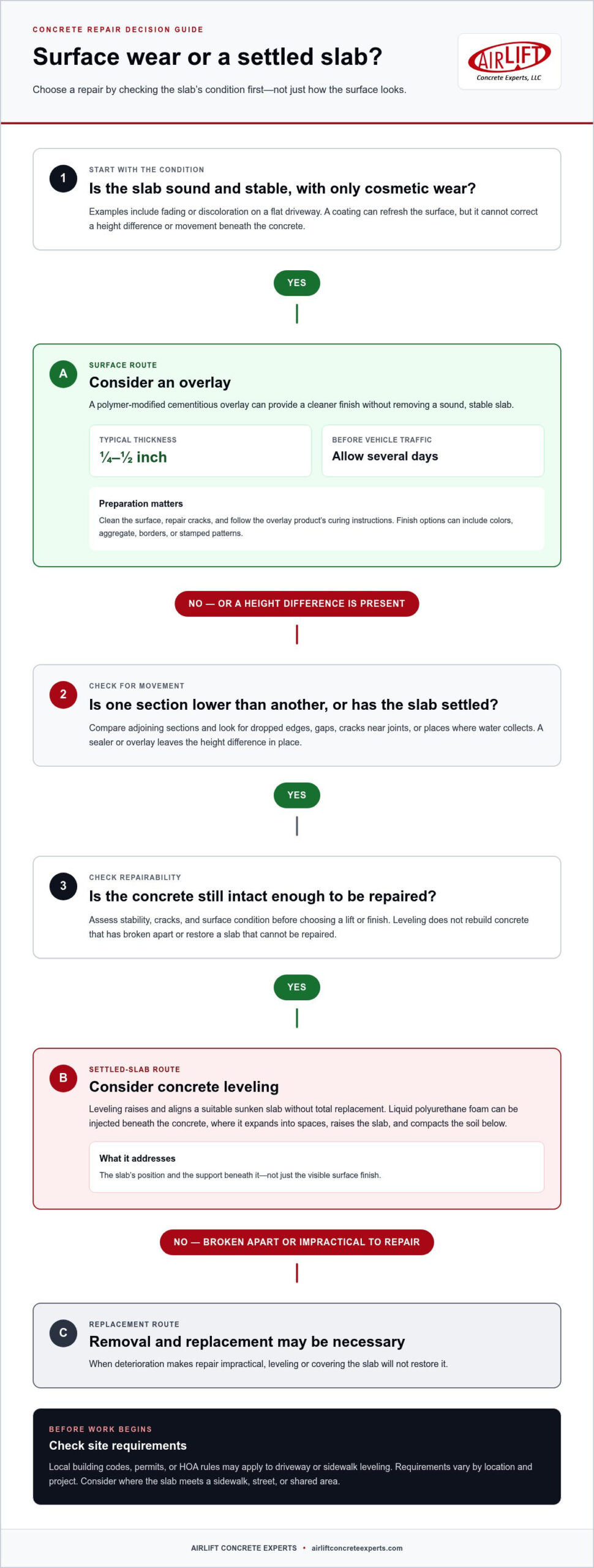
A driveway sealer can refresh a stained surface, but it won’t level a settled slab. If one section sits lower than another, a coating leaves the height difference in place. First identify whether the problem is cosmetic, such as fading, or structural, such as a dropped slab. That distinction guides the repair.
Overlays suit existing concrete that remains sound and stable. A polymer-modified cementitious overlay is typically applied about 1/4 to 1/2 inch thick. It can give a worn driveway a cleaner finish without removing the slab, and various colors, aggregate, borders, or stamped concrete patterns can transform its appearance. Preparation matters: clean the surface, repair cracks, and follow the overlay product’s curing instructions. After an overlay, allow several days before vehicle traffic.
Polymer cement can resurface worn concrete with less disruption than replacing the whole surface. It works best when the slab is intact enough to support a new finish, such as a flat driveway with cosmetic discoloration. An overlay can’t correct settlement beneath the slab. Applying a finish over a dip may leave the uneven profile visible and fail to address the cause of the movement.
Concrete leveling raises and levels sunken slabs without total replacement. However, it doesn’t rebuild concrete that has broken apart or restore a slab that cannot be repaired. When deterioration makes repair impractical, removal and replacement may be necessary. Before choosing a finish or lift, assess the slab’s stability, cracks, and surface condition.
Local building codes, permits, or HOA rules may apply to driveway or sidewalk leveling. Requirements can vary by location and project, so check local permit rules and neighborhood covenants before work begins. Consider where the slab meets a sidewalk, street, or shared area, since those boundaries can affect the project plan.
Freeze-thaw cycles can cause pitting and flaking, gradually dulling concrete driveways and sidewalks. Regular inspections help homeowners spot hairline cracks or dull areas before surface damage spreads. After winter, look across walkways and note changes around joints, edges, and places where water collects. Timely cleaning and maintenance help preserve the appearance of an overlay and other concrete upgrades.
Sealing schedules depend on exposure. In moderate climates, concrete driveways are typically resealed every 2-3 years. Under heavy sun, salt, or freeze-thaw, the typical interval is 1-2 years. Check the sealer’s instructions and the concrete’s condition when planning upkeep. For new concrete, manufacturers commonly specify waiting at least 28 days before sealing, while some recommend 90 days. Follow the product’s curing guidance.
Clean spills before oil or grime settles into the surface. For an oil stain, apply concrete degreaser, leave it for 15-30 minutes, then scrub and rinse. Pressure washing at 3000+ PSI can help remove driveway oil stains, but use care around weak or damaged areas. Regular cleaning also helps garden paths and entry walkways look cared for without adding decorative features that require extra attention.
Concrete improvements can last for decades when installed correctly and require little upkeep. Still, maintenance won’t correct a slab that has shifted; cleaning or adding sealer addresses the surface, not the support beneath it. If an uneven driveway or walkway is affecting the approach to your home, sidewalk and driveway leveling can address the slab’s position. Choosing the right repair, then keeping the surface clean and inspecting it routinely, helps maintain a durable finish and enhance curb appeal.
A slab can settle if the fill beneath it wasn’t compacted properly. Loose soil shifts under the concrete, leaving parts of the slab without even support. On an outdoor walkway, this movement may show up as a low edge, a gap, or cracks near a joint. Compare adjoining slabs and note where water collects after rain to track gradual changes.
Drought can dry and shrink soil beneath concrete, creating voids or allowing a slab to drop. For example, a driveway beside exposed, dry ground may shift as its supporting soil changes. Poor drainage can add to the problem by directing water toward the slab instead of away from it. Grading and drainage are important when assessing why an exterior surface has settled.
When a settled slab is suitable for lifting, liquid polyurethane foam is injected beneath the concrete. It expands into spaces, raises the slab, and compacts the soil below. This addresses the support beneath the surface rather than disguising unevenness with a decorative finish. A level path can create a more attractive approach to a home, whether the concrete is plain or stamped.
For new concrete, careful base preparation helps reduce settlement risk. Remove debris and soft soil, compact the substrate, and add gravel before placing concrete. A new sidewalk also needs a compacted gravel base, a drainage slope, and control joints. These steps support an even surface and help manage water. When planning an outdoor path, driveway, or garden approach, consider how grading directs water and how each slab meets the next. Addressing these site conditions helps the finished concrete complement the home’s exterior instead of drawing attention to uneven edges.
When assessing a settled area, consider whether poorly compacted fill, drought-related soil shrinkage, or grading and drainage may explain the slab movement.
Leveling can improve a home’s approach by aligning uneven driveway sections, sidewalks, and patios. A continuous surface creates a cleaner visual line from the street to the entrance, while settled edges can interrupt landscaping and draw the eye. Start by identifying which slabs look uneven and how they connect with paths, steps, or garden borders.
Concrete leveling can save homeowners 30% to 80% compared with full slab replacement. The project’s cost depends on factors such as slab size, access, concrete condition, and the voids beneath it. Lifting isn’t suitable for every damaged slab, so compare the work’s scope and repair method with replacement, not just the final finish.
When comparing quotes, look for a clear description of the affected areas, proposed leveling method, surface preparation, and included work. Check that each quote covers the same slabs and visible settlement. This makes differences easier to understand and helps you compare repair and replacement on equivalent terms.
Driveways, sidewalks, walkways, and patios can be candidates for leveling when their slabs have settled. Polyurethane foam cures in 15-20 minutes, and driveways, patios, and walkways can be used the same day after foam concrete lifting. A more even surface can complement existing landscaping without changing patio colors or patterns.
Prepare by clearing furniture, vehicles, planters, and other items from the affected area. The work then involves assessing the slab, drilling injection openings, and placing polyurethane foam beneath the concrete. As the foam expands, it fills spaces and lifts the slab. The surface is then checked for alignment with nearby concrete and entry points.
If settled slabs are disrupting your driveway, walkway, or patio, schedule concrete leveling to discuss a repair suited to the surface.
Airlift Concrete Experts helps property owners address sunken concrete with polyurethane concrete leveling and concrete raising. If a driveway, sidewalk, pool deck, or interior floor has settled but remains suitable for lifting, these services can restore a more even surface without automatically replacing the slab. For commercial properties, Commercial Concrete Lifting can address uneven concrete that affects the site.
The right next step depends on what has moved and the slab’s condition. Leveling is for concrete that has dropped; it doesn’t replace concrete that is too damaged to repair. Airlift Concrete Experts serves residential and commercial properties throughout our local service area, offering sidewalk and driveway leveling and pool deck repair.
For guidance on a settled slab at your property, contact Airlift Concrete Experts.
A thoughtful approach to improving curb appeal with concrete leveling starts with deciding how you want the entrance to look and feel. Consider the view from the street, the path visitors follow, and how the concrete connects with your landscaping. A short priority list can keep decisions focused: note which area draws your eye first and what you want to look more cohesive.
As you plan for improving curb appeal with concrete leveling, look beyond the immediate repair. Consider how your outdoor spaces support daily routines, and choose improvements that fit your home’s style. Clear priorities make it easier to discuss the concrete’s condition and the result you want.
For a practical next step, contact Airlift Concrete Experts today to discuss your concrete concerns. A welcoming approach to your home can begin with a focused plan.
Concrete leveling can make a home’s approach look more orderly by correcting the visual break created by a displaced slab. For example, an aligned walkway leading to the entrance can sit more naturally alongside landscaping and the home’s exterior. This can benefit homeowners in Malvern, Hot Springs, Little Rock, Cabot, Conway, Benton, Bryant, North Little Rock, Sherwood, Jacksonville, and Hot Springs Village.
Slabs can sink when their underlying support shifts or leaves gaps. Poorly compacted fill and drought-related soil shrinkage are possible causes; water movement beneath a slab can also affect its support. Look for changes such as a new gap beside a fixed threshold or a surface that slopes differently after dry weather. These clues help distinguish movement from ordinary surface wear.
Foam injection places liquid polyurethane beneath a slab. As it expands, it fills spaces and lifts the concrete. Mudjacking is a separate method that pumps a cement-based mixture beneath the slab to raise it. The materials and process differ, so the suitable approach depends on the slab’s condition and the repair goal. Airlift Concrete Experts offers polyurethane concrete leveling.
Concrete improvements can last for decades when installed correctly, though soil conditions, drainage, and workmanship affect durability. To help protect the result, keep water from collecting beside the slab and watch for fresh gaps or changes near fixed features, such as a garage threshold. Addressing drainage issues early can reduce avoidable stress on the supporting soil, but routine care cannot prevent every cause of ground movement.

 Call Now