
Choosing to rip out and replace your sunken driveway might actually be the most expensive mistake you make this year. Most homeowners in the Natural State feel a pit in their stomach when they see water pooling near their foundation or a trip hazard forming on the front walk. You’re right to worry about the liability and the potential for hidden structural damage that keeps you up at night. It’s a stressful situation, but it’s one that has a straightforward, reliable solution.
In this guide, you’ll learn the specific factors that drive the cost of polyurethane concrete leveling Arkansas property owners should plan for and why this specialized foam provides the best long-term value. We’ll explore how our state’s unique clay soils impact your concrete’s stability and why a permanent fix doesn’t have to involve damaging your landscaping. We’ll also break down the clear return on investment you get when choosing professional leveling over the high cost and disruption of a full slab replacement. This overview provides the clarity you need to protect your property’s value and your peace of mind.
Every sunken concrete slab in Arkansas tells a unique story of settlement. The cost of polyurethane concrete leveling Arkansas homeowners encounter depends primarily on the physical requirements of the lift. Unlike a standard patch, professional repair calculates the total surface area and the sheer weight of the concrete being moved. A thin sidewalk section is much lighter and requires less lifting force than a reinforced garage floor or a heavy driveway slab. Our technicians evaluate these variables to ensure the repair is both effective and permanent.
The depth of the void beneath your concrete is another major variable. While you only see the sunken surface, the hollow space underneath determines how much material we must inject to create a stable foundation. Site accessibility also plays a role in the final investment. Our specialized injection equipment is designed to be non-invasive, but if a technician has to navigate complex landscaping or tight corners to reach a backyard pool deck, the labor time reflects that logistical complexity. Finally, we must consider the specific density of the foam. High-density polyurethane is engineered to support specific loads, and using the correct grade ensures your concrete stays level for years to come.
Arkansas is famous for its expansive red clay. This soil is highly reactive. It swells significantly during our rainy seasons and shrinks just as dramatically during summer droughts. This constant movement creates massive voids as the soil pulls away from the concrete. When we perform concrete leveling methods using high-density foam, we aren’t just lifting the slab. We’re filling those voids with a waterproof material that won’t wash away or shrink like the underlying clay. This stabilizes the shifting soil and helps prevent the “sink and swell” cycle from ruining your property again.
The requirements for a residential driveway differ greatly from a commercial warehouse floor. While a driveway needs to support a few thousand pounds, a commercial slab might handle heavy forklifts and industrial shelving. These heavy-duty applications require a higher density of polyurethane to ensure the slab doesn’t deflect under load. For our commercial partners in Little Rock and Malvern, the value of zero downtime is a critical factor. Since polyurethane cures in minutes, businesses can resume operations immediately. This avoids the thousands of dollars in lost productivity that usually comes with replacing a floor or waiting days for traditional materials to dry.
Homeowners often look at the initial price tag when comparing repair methods. While mudjacking might seem like a budget-friendly choice at first glance, the true cost of polyurethane concrete leveling Arkansas residents should consider is the investment over the life of the property. Mudjacking relies on a heavy mixture of sand, cement, and soil. This slurry can weigh up to 150 pounds per cubic foot. In comparison, the high-density foam we use is incredibly lightweight, weighing only about 2 to 4 pounds per cubic foot. Citing research on polyurethane resin for soil stabilization shows that these modern resins create a durable, waterproof bond that doesn’t rely on sheer mass to achieve results. It’s a cleaner, smarter way to handle structural settlement.
The physical impact on your property is also vastly different between these two methods. Mudjacking requires drilling large holes, often the size of a soda can, across your driveway or patio to pump in the thick slurry. Polyurethane injection uses holes no larger than a penny. These small ports are easily patched and become nearly invisible once the job is complete. If you’re looking for a solution that preserves your home’s curb appeal while fixing the underlying issue, the choice is clear. We’ve seen many neighbors regret the “quick fix” of mudjacking when they see the unsightly patches left behind on their concrete.
Our state’s expansive clay is already prone to shifting and compression. Adding hundreds of pounds of heavy cement slurry on top of failing soil is often a recipe for disaster. The added weight can actually compress the soil further, causing the slab to sink even deeper than it was before the repair. This high failure rate in Arkansas clay means many homeowners end up paying for the same job twice. A failed mudjacking attempt doubles your eventual repair costs because the old, heavy material often has to be removed or stabilized before a permanent fix can be applied. It’s much more cost-effective to do it right the first time.
Time is money, especially for busy families or local businesses. Polyurethane foam reaches 90% of its full strength in under 30 minutes. You can drive your car over a leveled driveway almost immediately after we finish the injection process. Traditional mudjacking requires you to wait 24 to 72 hours before the surface is usable. Choosing polyurethane concrete leveling saves significant labor hours and eliminates the frustration of a blocked driveway for days on end. If you want to see how this technology can transform your property, you can schedule a professional assessment with our Malvern-based team today.
When homeowners compare the cost of polyurethane concrete leveling Arkansas provides against a full tear-out, they often overlook the “soft costs” of replacement. Demolition isn’t just about breaking up old slabs. It involves heavy equipment that can tear up your sod and compact the soil in your yard. You also have to factor in the labor for hauling and the environmental disposal fees for the old material. In cities like Little Rock or Benton, you might also face permitting and inspection fees for new construction that simply don’t apply to a repair project. These administrative hurdles add time and unexpected expenses to a project that could have been solved in a single afternoon.
Choosing to replace concrete on the same unstable soil is often a temporary fix for a permanent problem. If the underlying red clay hasn’t been stabilized, that heavy new slab will eventually settle and crack just like the original one. Professional leveling is an investment in the foundation of your property, not just a cosmetic surface treatment. It ensures that the void is filled and the soil is reinforced, providing a stable base that replacement alone cannot offer.
A full replacement is a labor-intensive, multi-day event. It requires framing, pouring, and a lengthy curing period during which you can’t use your driveway or walkway. Most importantly, pouring new concrete doesn’t solve the underlying problem of soil erosion. Choosing concrete lifting instead addresses the root cause by filling the subgrade voids directly. Our process requires no heavy machinery on your lawn, preserving your landscaping and saving you the expense of professional sod repair. We focus on stabilizing the ground first, which is the only way to ensure your surfaces stay flat for the long haul.
Aesthetic consistency is a major benefit of leveling. New concrete is bright white and rarely matches the weathered look of your existing driveway or patio. Leveling keeps your original surfaces intact, ensuring a perfect color match across your entire property. Beyond looks, searching for polyjacking near me is a proactive way to eliminate premises liability. A single trip and fall accident on a sunken sidewalk can cost far more than a professional repair. When it’s time to sell your home, having documented structural repairs from a regional specialist acts as a major selling point. It shows potential buyers that you’ve maintained the property’s integrity using the most advanced technology available.
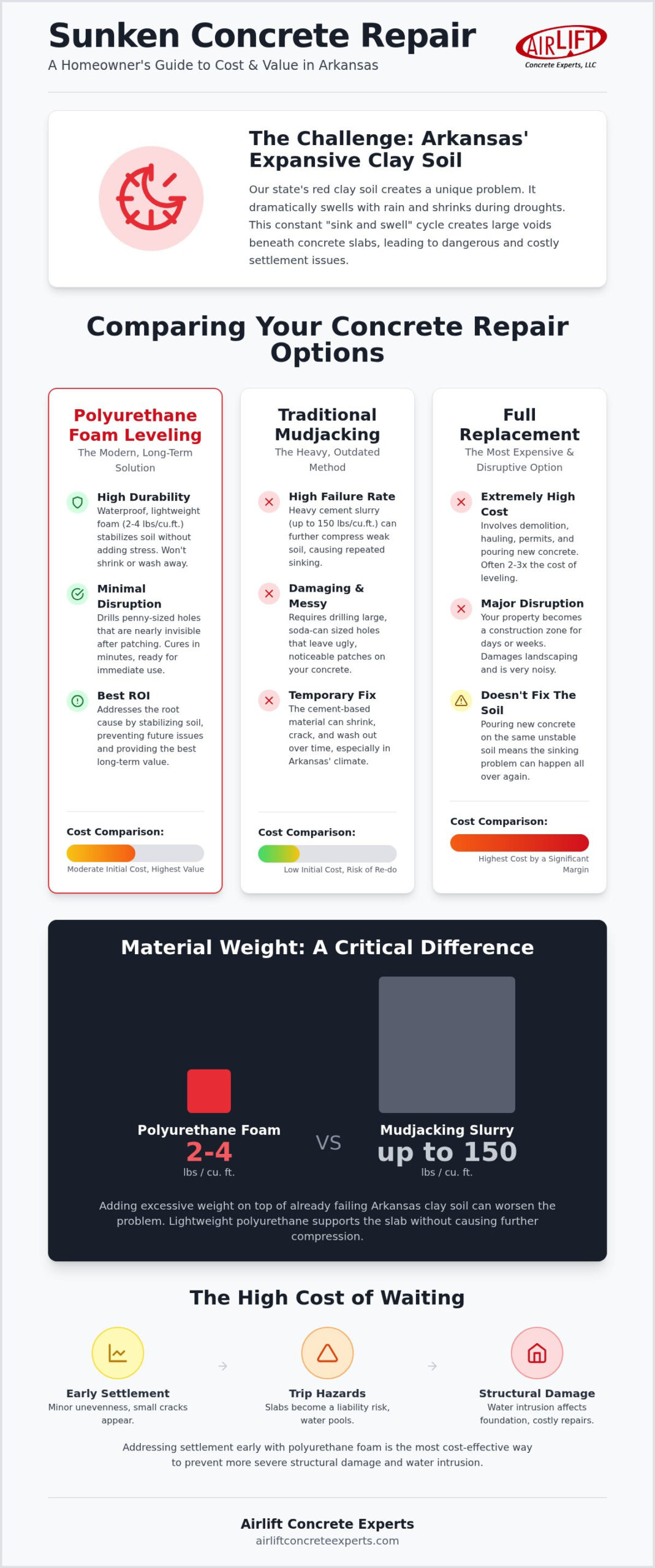
It’s tempting to ignore a small crack in your driveway or a slight dip in your sidewalk. However, in Arkansas, our seasonal weather patterns turn these minor issues into major structural failures. During our winter months, rainwater seeps into those tiny fissures and freezes. When water turns to ice, it expands with incredible force, shattering the internal structure of your concrete. Over time, this cycle of freezing and thawing creates larger gaps that allow even more water to wash away the underlying soil. This erosion directly impacts the cost of polyurethane concrete leveling Arkansas homeowners face, as larger voids require significantly more material to stabilize and lift.
Leaving a void unaddressed also risks a total slab collapse. When the soil beneath a heavy concrete section completely washes away, the slab is left “bridged,” meaning it’s supported only by its edges. Without a solid base, the weight of a vehicle or even a heavy storm can cause the concrete to snap. At that point, the slab is no longer a candidate for leveling and must be fully replaced. Acting early preserves the integrity of your original surfaces and ensures the repair remains a simple injection process rather than a complex demolition project.
Sunken concrete often creates a negative pitch, which is a subtle but dangerous problem. Instead of shedding water away from your home, a sunken patio or walkway funnels rainwater directly toward your foundation walls. This constant moisture saturation softens the soil near your footer, leading to foundation settlement and basement leaks. If you don’t address the concrete pitch, you may eventually need foundation repair near me to fix wall cracks or bowing. The compounding structural damage caused by improper drainage is far more expensive to remediate than a proactive afternoon of concrete leveling.
Safety is the most immediate concern for any property owner. A trip hazard as small as a quarter-inch is enough to create a significant liability risk. Home insurance companies are increasingly strict about these hazards during routine property inspections. If an adjuster identifies sunken concrete, they may increase your premiums or require a repair to maintain your coverage. A legal settlement from a guest’s injury is vastly more expensive than any professional repair. By intervening early, you minimize the volume of foam needed and secure your property against these hidden financial risks. It’s the most responsible way to manage the long-term cost of polyurethane concrete leveling Arkansas property maintenance requires.
Don’t wait for a small dip to become a major liability. Schedule your complimentary on-site assessment today to stabilize your concrete before the next rainy season begins.
You might be tempted to call around for a quick price over the phone, but phone-based “ballpark” quotes are notoriously unreliable for concrete work. A technician simply can’t see the depth of a void or the specific pitch of a slab through a screen. Without a physical inspection, a contractor might underestimate the material needed, leading to surprise charges once the work begins. Conversely, they might give an inflated estimate to cover their own uncertainty. An accurate understanding of the cost of polyurethane concrete leveling Arkansas residents should expect requires a professional walk-through to evaluate the unique structural challenges of your specific site.
During an on-site assessment, we look for more than just the visible dip in the concrete. We check for underlying issues like poor soil compaction or hidden plumbing leaks that might be washing out the subgrade. If these root causes aren’t identified, any repair will only be temporary. This is why verifying the credentials of a professional foundation repair specialist is vital. You need a partner who understands the relationship between soil mechanics and slab stability. For our industrial and commercial clients, we also provide a specialized framework that accounts for high-traffic loads and slab thickness, ensuring the quote reflects the engineering requirements of a heavy-duty environment.
Our assessment is a methodical, transparent process designed to give you total confidence. We don’t just look at the surface crack; we analyze the soil stability beneath it. We focus on identifying the “why” behind the sinking before we ever provide a final quote. Whether you’re in Malvern, Little Rock, or the surrounding communities, our goal is to provide a clear, solution-oriented evaluation. We treat every property like it belongs to a neighbor because we’re deeply rooted in this region. This neighborly approach means you get honest answers and a repair plan built for the long haul.
When you’re interviewing contractors, it’s important to ask specific questions about their materials and expertise. Inquire about the density of the polyurethane they plan to inject into your soil. Low-density foams are often cheaper, but they won’t provide the structural support needed for Arkansas’s heavy clay. Ask about the warranty and the expected lifespan of the foam resin. Finally, confirm the contractor is a dedicated specialist in repair. A general handyman might offer a lower initial price, but they often lack the specialized high-density technology and precision equipment required to deliver a permanent, warrantied result.
Protecting your home starts with understanding the unique challenges of our local soil. We’ve explored how the cost of polyurethane concrete leveling Arkansas residents invest in is actually a strategic long-term savings plan. This specialized method stabilizes shifting red clay and prevents the compounding expenses of foundation water intrusion. By choosing a precision repair over a disruptive replacement, you preserve your landscaping, avoid administrative permitting fees, and maintain your property’s original curb appeal. It’s the most efficient way to transform a stressful structural liability into a stable, safe asset.
Since 2017, our family-owned team has focused on providing permanent results for our neighbors in Malvern, Little Rock, and across the state. We use specialized high-density polyurethane to ensure your concrete stays level for years to come, giving you lasting peace of mind. You don’t have to face structural concerns alone; we’re here to provide the technical expertise and neighborly service your home deserves. Ready to fix those trip hazards for good? Schedule Your Complimentary Concrete Leveling Assessment today and let us help you restore the safety and value of your property with a solution that lasts.
Polyurethane injection typically has a higher upfront material cost compared to traditional mudjacking. However, the cost of polyurethane concrete leveling Arkansas property owners pay reflects a more permanent solution. Mudjacking uses a heavy sand and cement slurry that often fails in our expansive clay soil, leading to repeat repairs. Polyurethane is lightweight and waterproof, meaning it won’t wash away. This durability often makes it the more economical choice over the lifespan of your home.
Polyurethane foam is engineered to last for the lifetime of the concrete slab itself. Unlike organic materials or cement slurries, high-density foam does not biodegrade or lose its structural integrity over time. In the variable Arkansas climate, this material remains stable regardless of moisture levels or temperature swings. Once the foam reaches its full strength, it provides a consistent, waterproof base that effectively prevents future settlement in the treated area without the risk of shrinkage.
Most standard homeowners insurance policies do not cover concrete leveling because settlement is typically classified as a maintenance issue or “earth movement.” Coverage is generally reserved for sudden, accidental damage rather than gradual soil erosion or clay shrinkage. However, you should check your specific policy or speak with your agent. Proactive leveling is often viewed as a way to prevent more expensive liability claims or foundation damage that insurance also might not cover in the future.
Our injection process is designed to be as non-invasive as possible. We don’t require heavy trucks or excavators to drive across your lawn, which preserves your grass and flower beds. The equipment uses small, flexible hoses that can reach around corners or through narrow gates. Because we only drill penny-sized holes in the concrete itself, there is no messy excavation or dirt piles left behind once our Malvern-based team completes the project at your property.
Polyurethane can lift slabs with minor to moderate cracking, but it cannot fix concrete that has crumbled into small, disconnected pieces. If a slab is severely spider-webbed or has settled more than six inches, replacement might be the safer recommendation. During our complimentary initial assessment, we evaluate the structural integrity of the concrete. If the slab can still hold its own weight, we can usually stabilize the soil and restore a level surface without needing demolition.
You can typically drive your vehicle on the treated surface within 15 to 30 minutes of the injection. Polyurethane foam reaches approximately 90% of its full compressive strength almost immediately. This rapid cure time is a significant advantage over traditional methods that require 24 to 72 hours of drying time. Whether we are leveling a residential driveway or a commercial warehouse floor, your daily routine or business operations can resume without lengthy delays or blocked access.
Ignoring sunken concrete usually leads to more extensive and expensive problems. Small voids underneath the slab will continue to grow as rainwater washes away more soil, eventually leading to a total slab collapse. Additionally, the uneven surface creates a significant trip hazard that increases your premises liability. The longer you wait, the more material is required for the lift, which ultimately increases the cost of polyurethane concrete leveling Arkansas homeowners must eventually pay for a professional repair.
For most residential projects in Little Rock or Conway, a building permit is not required for concrete leveling. This applies to ground-level slabs that are not more than 30 inches above the surrounding grade. However, commercial projects or repairs involving public sidewalks may have different local requirements. Our team stays updated on regional regulations to ensure every project remains compliant with local codes, but we always recommend confirming with your local building department for unique or elevated structures.

 Call Now