

A patio puddle isn’t always just a drainage problem; the concrete may have settled and created a low spot. To understand how to fix water pooling on a concrete patio, first identify whether poor surface slope or sinking concrete is trapping the water. Then address the cause by restoring the slab’s position or correcting the drainage path.
It’s frustrating to watch water linger on a surface that should shed it, especially when the puddle returns after you clear nearby debris. The water’s pattern, the slab’s condition, and the nearby drains can help you distinguish a drainage issue from settlement.
This guide explains what to inspect, how to distinguish a surface-slope problem from a sinking slab, and when concrete lifting can help restore the patio’s drainage. You’ll also learn why a surface patch may not solve a low spot caused by movement beneath the concrete.
To determine how to fix water pooling on concrete patio surfaces, trace where water enters, collects, and exits. A puddle may result from a clogged outlet, an obstructed perimeter, poor slope, or settled concrete.
Watch the patio during rainfall, then note where water first gathers and whether it reaches a drain. Clear visible debris before deciding the slab needs repair; leaves or trash can block drainage and create ponding. Check the surrounding soil, downspouts, and nearby watering zones, too—if misdirected spray heads or leaking lines are adding excess water, residential irrigation specialists like Sonora Sprinkler Inc. can troubleshoot and repair the system. Water near the house should flow away from the foundation, not collect against it.
Local permit and runoff requirements vary. Before digging or changing a discharge route, contact your local building department about rules for your property.
Remove leaves from drain openings and check that water can pass through to the outfall. A raised scupper can leave a rim that traps water, so make sure the opening sits flush with or slightly below the concrete. Follow the route to its discharge point; a blocked or poorly directed outlet can send runoff back toward the patio.
Keep discharge away from the house. Don’t redirect it onto neighboring property or somewhere it can pool beside a foundation.
Walk the patio edge and clear soil, mulch, plants, and stored items that block runoff. Check whether edging or landscaping forms a dam at the low side. If water flows toward the house, create a route that sends it away; a final slope of 1/8 to 1/4 inch per foot away from structures helps guide runoff.
For a moderate dip measuring 1/4 to 1 inch, bonding grout, patching mortar, or polymer-modified concrete patch may suit the repair. Larger repairs may use a bonded overlay 1/2 to 1 inch thick, but overlays can affect door clearance or leave drainage problems if the slope remains wrong. Use exterior-rated self-leveling concrete that preserves runoff direction.
To understand how to fix water pooling on concrete patio areas, match the repair to the cause. Install a channel drain by cutting a trench across the runoff path, setting the channel and grate flush with or slightly below the patio, then connecting it to a suitable discharge point. A contractor should address recurring ponding, a settled slab, or a void beneath the concrete; those conditions may need lifting rather than an overlay.
Check whether the patio surface directs runoff away from the house before changing its finish. For repitching a concrete deck, a typical target is a 2% slope, equivalent to ¼ inch per foot.
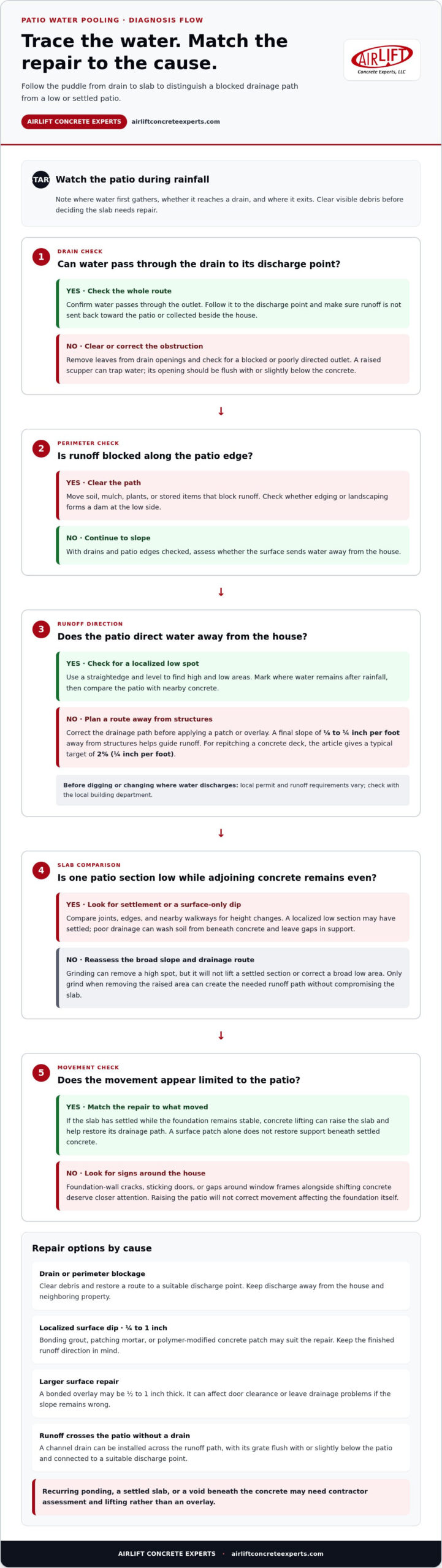
Compare the patio’s position with nearby slabs and the house before choosing a repair. A localized dip points to a different issue than movement across the foundation.
Polyurethane lifting can help when a patio slab has settled over a void, rather than simply needing a surface patch. It raises the existing concrete and can restore its slope when settlement caused the low spot.
If a patio has settled and needs controlled lifting, request an assessment for polyurethane concrete leveling.
Airlift Concrete Experts provides polyurethane concrete leveling for settled patio slabs that create low spots and recurring puddles. The process raises existing concrete, making it a practical option when the slab has sunk but remains suitable for lifting. It addresses the slab’s position, not a clogged drain or an outlet that sends water toward the house.
For homeowners in Arkansas, the key is matching the repair to the cause. If the concrete has settled, concrete raising can help restore a more even surface and its drainage path. If pooling comes from blocked drainage or an incorrect surface slope, those conditions need attention as well. Airlift Concrete Experts also provides commercial concrete lifting and interior floor leveling.
Contact Airlift Concrete Experts to discuss a settled concrete patio and the pooling you’re seeing.
A patio that keeps holding water deserves a repair based on what the concrete is doing, not just how the surface looks. If you’re deciding how to fix water pooling on a concrete patio, note where the puddle forms and whether the slab appears settled. Those details help focus the assessment on the actual cause.
When settlement is the issue, Airlift Concrete Experts offers polyurethane concrete leveling and concrete raising for sunken slabs. Commercial concrete lifting is also available for larger property needs. Drainage still matters, so share recurring flow patterns or visible changes around the patio when discussing the repair.
Contact Airlift Concrete Experts today to discuss a settled patio and possible next steps. A clear diagnosis can help you move forward with confidence.
A surface issue affects the finish or slope; a subsurface issue involves movement beneath the slab. Look across adjoining patio panels: a puddle confined to one depressed section suggests localized settlement, while water across a broad area may point to an overall slope problem. Note whether cracks or uneven joints change over time. Their location and pattern help identify which part of the patio needs attention.
Pooling usually occurs when water cannot follow a clear path off the concrete. A clogged drain, an outlet that sits above the slab, or an uneven surface can trap runoff. Soil loss beneath a slab can also create a depression. For example, water that consistently remains beside one patio joint may indicate a low section, while pooling near a covered drain suggests an obstruction.
Ponding water is water that remains on a surface instead of draining away after rainfall or washing. On concrete, it may appear as a shallow puddle in a low area or as a thin film that lingers across a larger section. Watch how long and where it remains. Green growth, white mineral deposits, or damp marks can reveal recurring moisture even after the surface dries.
Water pools when the patio’s surface, drainage route, or supporting soil prevents runoff from leaving. A patio that slopes toward a wall can direct rain toward the house; a settled corner can trap it in a localized hollow. Leaves covering a drain may cause a similar symptom. Compare the puddle’s location with drains, doors, joints, and downspout discharge to narrow down the cause.
A commonly recommended patio pitch is 1% to 2%, with the surface directing water away from structures. A 2% slope equals ¼ inch of drop per foot. The needed direction depends on the patio’s layout and where runoff can discharge safely. Check the full drainage path, since the right pitch at the house edge won’t help if water becomes trapped farther down.
Yes, lifting can correct pooling when a settled slab has created the low spot. Mudjacking and polyurethane lifting are different ways to raise concrete, and the suitable approach depends on the slab and the void beneath it. Airlift Concrete Experts offers polyurethane concrete leveling and concrete raising for sunken slabs. If the cause is a blocked drain or incorrect surface pitch, lifting alone won’t correct it.

 Call Now