How to Fix Sunken Concrete Next to Your Foundation
Posted By: Airlift Concrete Experts, 31 Oct 12:00 am Category:
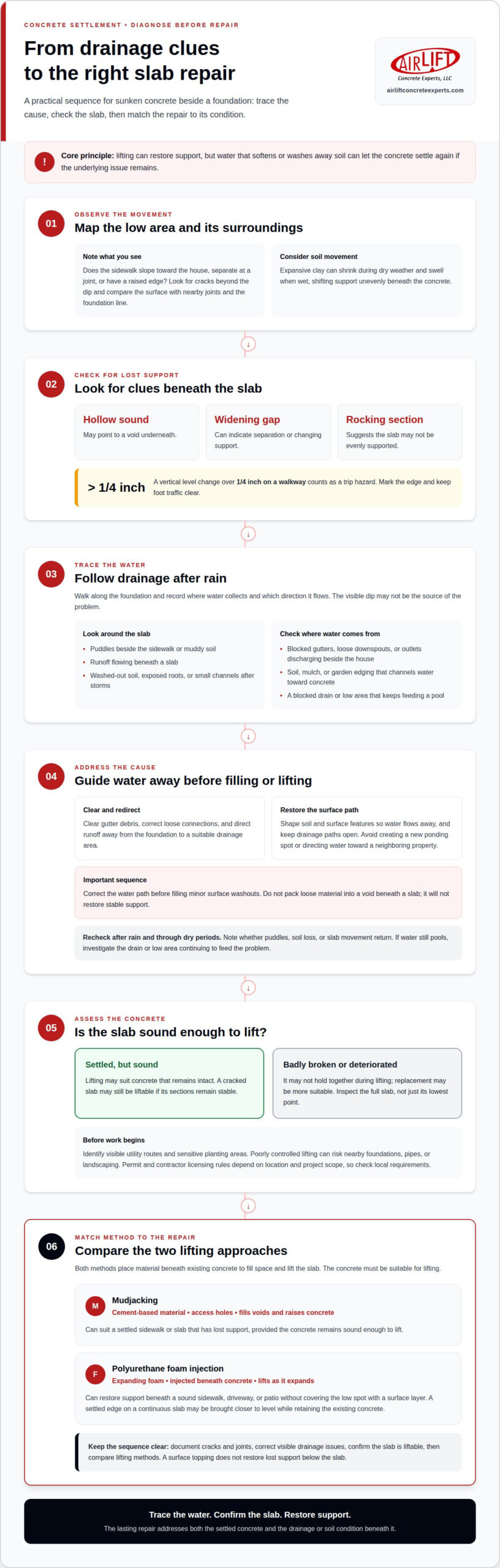
UncategorizedSunken concrete beside a foundation needs its support restored, and the cause of the settlement addressed. Fixing sunken concrete next to a foundation starts with checking drainage and soil conditions, then choosing a repair suited to the slab. Water that softens or washes away supporting soil can allow the concrete to settle again if the underlying problem remains.
A dip or gap near your home can be unsettling, but it doesn’t automatically mean the foundation is failing. The location and movement of the concrete, any cracks, and the drainage pattern can help distinguish a settled walkway or slab from signs that need closer attention.
Learn what can cause concrete to sink beside a foundation, how to spot drainage problems, and what to consider when comparing lifting methods. These practical checks can help you decide whether a slab is suitable for lifting or needs a different repair.
Key Takeaways
- Look for soil movement, uneven support, and nearby cracks to help identify why a sidewalk or slab has settled.
- Trace where water flows around the foundation, since drainage problems can soften or erode the soil beneath concrete.
- Compare mudjacking and foam injection by how each method lifts the slab and suits the repair conditions.
- Learn when polyurethane concrete leveling can raise sunken concrete and restore a more even surface.
Causes of sidewalk settlement
- When fixing sunken concrete next to a foundation, first map the low area and its surroundings. Note whether the sidewalk slopes toward the house, separates at a joint, or has a raised edge. Check for cracks beyond the dip, since they can point to shifting support. Expansive clay soil may shrink during dry weather and swell when wet, shifting support unevenly beneath the concrete.
- Look for signs that the slab has lost support before deciding how to repair it. A hollow sound, widening gap, or rocking section can point to a void underneath. Compare its surface with nearby joints and the foundation line. A vertical level change over 1/4 inch on a walkway counts as a trip hazard, so mark the edge and keep foot traffic clear.
- Decide whether the slab is intact enough to lift or should be replaced. Lifting may suit concrete that has settled but remains sound; a badly broken or deteriorated section may not hold together during the work. An intact sidewalk slab with a raised joint edge, for example, may be improved by trimming that edge. Inspect the full slab, not just its lowest point.
- Before fixing sunken concrete next to a foundation, consider local requirements and nearby features. Permit and contractor licensing rules can depend on location and project scope, so check applicable local requirements. Poorly controlled lifting can also risk nearby foundations, pipes, or landscaping. Identify visible utility routes and sensitive planting areas, then point them out to the professional doing the work.
Expansive clay soil can shrink in dry weather and swell when wet, shifting support unevenly beneath concrete. This change in soil conditions is one possible cause of sidewalk movement and foundation settlement.
Drainage and soil maintenance
- Walk along the foundation after rain and note where water collects. Look for puddles beside the sidewalk, muddy soil, or runoff flowing beneath a slab. Poor drainage can soften or wash away soil supporting a footing, leaving concrete without even support. Record the location and direction of the flow to help trace the source, rather than treating only the visible dip.
- Check gutters and downspouts for blockages, loose connections, or outlets that discharge beside the house. A downspout near a walkway can repeatedly saturate the same soil. Clear debris and direct runoff away from the foundation to a suitable drainage area. Avoid directing water toward a neighboring property or creating a new ponding spot near another slab.
- Look for surface features that funnel water toward the concrete. Soil, mulch, or garden edging can form a shallow channel after repeated rainfall. Restore the surface so it guides water away from the foundation, and keep drainage paths open. If water still pools, check whether a blocked drain or low area continues to feed the problem.
- Watch for erosion after storms. Exposed roots, washed-out soil, and small channels beside a sidewalk can show where runoff is removing support. Fill minor surface washouts only after correcting the water path; otherwise, the next flow may carry the soil away again. Don’t pack loose material into a void beneath a slab, since that won’t restore stable support.
- Recheck the same locations after rain and through dry periods. Note whether puddles, soil loss, or slab movement return. A lasting sidewalk repair also addresses the underlying drainage or soil issue. Once water flow is controlled, assess whether the settled concrete needs lifting; concrete leveling solutions can help restore support beneath a sunken slab.
Mudjacking and slabjacking
- Assess whether the original slab is intact before comparing lifting methods. Mudjacking and slabjacking raise settled concrete by filling space beneath it, rather than replacing the surface. A cracked slab may still be liftable if its sections remain stable. A badly broken or crumbling section may not move as one piece, making replacement more suitable.
- Mudjacking raises concrete by pumping a cement-based material beneath the slab through access holes. The material fills voids and lifts the concrete toward the desired position. This approach can suit a sidewalk that has settled or lost support, provided the concrete remains sound enough to lift.
- Compare slabjacking options with the condition and location of the concrete. The term is often used for methods that pump material beneath an existing slab to lift it. For example, slabjacking may raise a garage floor that has dropped where it meets a wood floor. Cracks may need separate repair after the lift.
- Use the slab’s shape to guide the assessment. A garage floor that tapers back to its proper level over about three feet has a different lifting profile from one with a single abrupt drop. Note the low area, nearby cracks, and joints before work. These details help identify where support is missing and how the slab may need to move.
- Focus homeowner repairs on observation and preparation. You can document cracks, clear access to the slab, and address visible drainage issues, but lifting concrete requires controlled placement of material beneath it. A surface topping won’t restore lost support below the slab. Professional lifting can raise a sound sidewalk or driveway; a broken section may need replacement.
Why Choose Polyurethane Foam Injection?
- First confirm that the concrete remains intact and suitable for lifting. Polyurethane foam injection places expanding foam beneath settled concrete, where it lifts the slab as it expands. This method restores support beneath a sound sidewalk, driveway, or patio instead of covering the low spot with a surface layer.
- Compare the repair method with the slab’s condition and site access. Foam is injected beneath the concrete, addressing the void below rather than rebuilding the surface. For a continuous slab with a settled edge, restoring support underneath can bring the surface closer to level while retaining the existing concrete.
- Plan the work around the slab’s size, access, and required lift. A small walkway and a broad driveway present different conditions, so the concrete’s dimensions and settlement pattern affect the schedule. The repair’s service life also depends on soil and drainage conditions. Water that continues to soften or wash away support can contribute to renewed movement.
- Assess a concrete leveling company by the quality of its site evaluation. A useful assessment identifies the settled area, checks for cracks and drainage concerns, and explains how lifting can restore support beneath the slab. The proposed repair should match the concrete’s condition. A severely broken section or ongoing foundation movement needs more than simply raising the surface.
- Use the assessment to understand the intended result and repair limits. Polyurethane foam injection raises sunken concrete, but it does not correct every cause of foundation settlement or replace damaged concrete. Share where water collects and where the slab has shifted, then discuss how those conditions affect the repair plan. For an on-site evaluation of a settled slab, request concrete leveling.
A sidewalk slab that has settled or lost support may be lifted with mudjacking or polyurethane foam injection. Both methods restore support beneath the slab, but use different materials.
Airlift Concrete Experts: Polyurethane Concrete Leveling
Airlift Concrete Experts provides polyurethane concrete leveling for sunken slabs beside foundations, walkways, and driveways. Expanding foam is injected beneath settled concrete to raise the slab and restore support. This can suit an intact slab that has dropped, rather than one broken into sections that need replacement.
Consider this service when concrete has settled and drainage or soil conditions have also been assessed. Airlift Concrete Experts also provides concrete raising, commercial concrete lifting, and interior floor leveling. The right repair depends on the slab’s condition and what caused it to move. Share what you’ve noticed about cracks, low spots, and water flow.
For help with a sunken slab, contact Airlift Concrete Experts or visit airliftconcreteexperts.com.
Make a Clear Plan for the Slab
A sound approach to fixing sunken concrete next to your foundation starts with determining whether the concrete is intact enough to raise and whether water or soil movement is affecting its support. Keep a simple record of where the slab has shifted, any changing cracks, and where runoff collects. These observations can focus the repair discussion on the cause, not just the visible dip.
Airlift Concrete Experts offers Polyurethane Concrete Leveling, concrete raising, and Commercial Concrete Lifting for settled concrete. If the slab beside your home or business needs attention, share what you’ve noticed with the team and discuss the right next step.
Contact Airlift Concrete Experts to talk about your concrete. A careful plan can help you move forward with confidence.
Frequently Asked Questions
What causes concrete to sink next to a house foundation?
Concrete sinks when the soil beneath it no longer provides even support. Water from a downspout can repeatedly saturate one area, while expansive clay can shrink during dry weather and swell when wet. Notice whether the low spot follows a runoff path or appears near a slab joint. These patterns can help distinguish localized soil movement from broader foundation concerns.
How do contractors lift sunken concrete slabs beside a foundation?
To lift a settled slab, a material is injected beneath it to fill the space and raise the concrete. The process involves locating suitable injection points, pumping material below the slab, and monitoring its position as it moves. Polyurethane foam expands beneath the concrete, while mudjacking uses cement-based material. The right method depends on the slab’s condition and support needs.
What is the difference between mudjacking and polyurethane foam lifting?
Mudjacking pumps a cement-based mixture beneath the slab, while polyurethane lifting injects expanding foam. Both methods aim to fill space below settled concrete and raise it, but use different materials. The choice depends on the slab, site access, and conditions beneath the concrete. For example, an assessment considers whether the slab is intact and whether drainage or soil problems have been addressed.
How do you fix drainage and soil erosion causing concrete to sink near a foundation?
Start by tracing where water reaches the settled area. Clear clogged gutters, repair disconnected downspouts, and direct runoff away from the foundation. Address visible channels or washed-out soil without packing loose fill into a void beneath the slab. Recheck the area after rain. Airlift Concrete Experts serves Malvern, Hot Springs, Little Rock, Cabot, Conway, Benton, Bryant, North Little Rock, Sherwood, Jacksonville, and Hot Springs Village, where local drainage patterns can inform the repair plan.
How long does concrete leveling take, and how long does the repair last?
The work schedule depends on the slab’s size, site access, and required lift. The repair’s service life depends on soil and drainage conditions; water that continues to soften or wash away support can lead to renewed movement.



 Call Now