How to Prepare for Concrete Leveling Service Before Work
Posted By: Airlift Concrete Experts, 29 Oct 10:00 am Category:
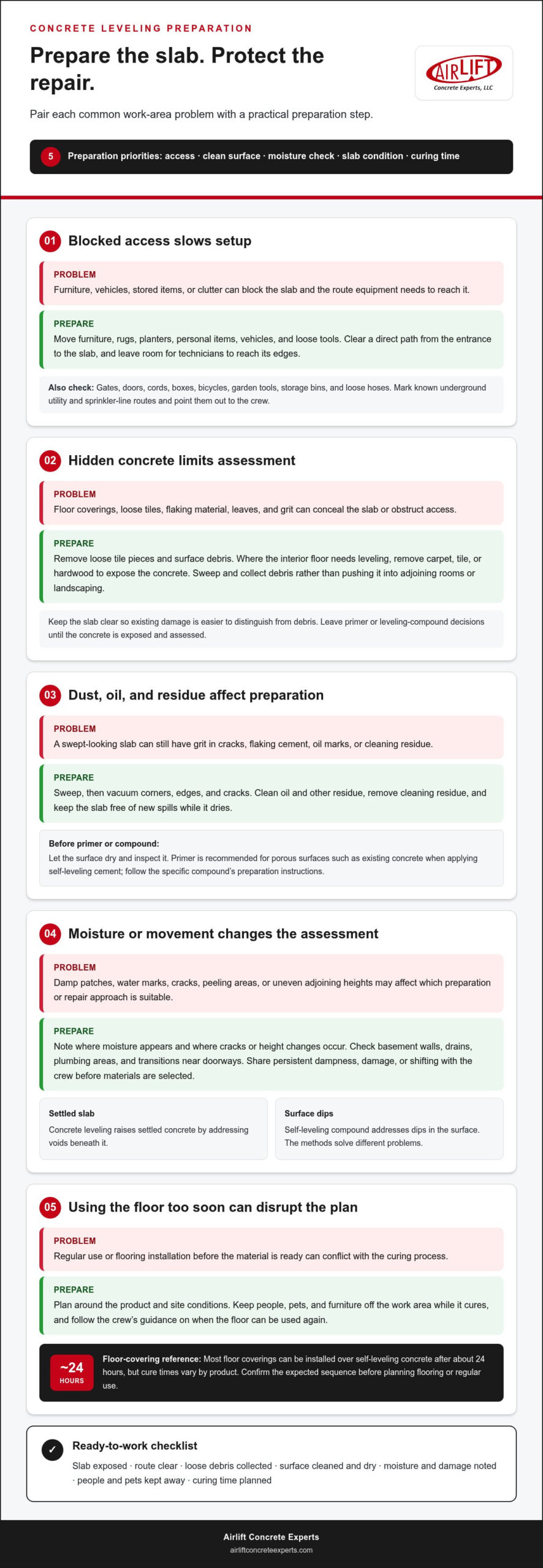
UncategorizedKnowing how to prepare for a concrete leveling service starts with clearing the work area: move furniture and personal items, remove loose debris, and expose the slab where needed. Check the concrete for moisture and underlying issues, and keep people and pets away from the work zone. After the work, stay off the floor until it has cured.
It’s understandable to want the area ready without making the repair harder. A clean, accessible slab helps the crew work efficiently, while a clear route for equipment and hoses makes setup easier.
This guide explains what to move, how to clean and assess the slab, and how to prepare access to the work area. You’ll also learn what to expect while the concrete cures, so you can plan around the repair and protect the finished surface.
Key Takeaways
- Expose the slab in the repair area by moving furnishings and removing floor coverings where needed.
- Clear dust, oil, and other residue so the concrete surface is ready for the planned work.
- Note signs of moisture, movement, or damage that could affect how the slab should be prepared.
- Make room for equipment and hoses, keep pets away from the work zone, and follow the crew’s directions about when to use the floor again.
Clearing debris and loose tiles
Start by exposing the concrete and removing anything that could block access to the work area.
Yes. Mark known underground utility and sprinkler-line routes, then point them out to the crew before work begins.
-
Move furniture and debris
Move furniture, rugs, planters, and personal items away from the slab before the crew arrives. Clear nearby shelves or surfaces if stored items could fall or obstruct access during the repair. Check corners and the edges of the work zone for boxes, cords, and small objects. Keep belongings outside both the work area and its access route.
-
Clear the work area
Open a direct path from the entrance to the slab, and remove anything that could trip workers or snag equipment. In a garage, move vehicles and loose tools; on a patio, shift chairs, pots, and hoses. Leave room around the affected concrete so technicians can reach its edges. Keep children and pets away from the cleared zone while work is underway.
-
Remove loose tiles and surface debris
Pick up loose tile pieces, flaking material, leaves, and grit so the slab is visible. If carpet, tile, or hardwood covers an interior floor that needs leveling, remove it to expose the concrete. Don’t leave cracked or loose pieces in place where they could hide surface conditions or obstruct access. Sweep the exposed area and collect debris rather than pushing it into adjoining rooms or nearby landscaping.
Keep the cleared slab free of items that could be mistaken for part of the surface. This gives the crew a clearer view and helps distinguish existing damage from debris brought in by foot traffic. Leave decisions about primer or leveling compound until the concrete is exposed and ready to assess.
Cleaning and surface preparation
Clean the exposed slab before applying any leveling compound or primer. Dust, oil, and moisture can affect adhesion, so prepare existing concrete according to the product instructions.
- Remove loose material. Sweep the slab, then vacuum corners, edges, and cracks where grit collects. In a basement, clear dust from around floor drains and wall edges as well as the main floor. Remove flaking cement and debris that could obscure the surface. Don’t cover loose material with primer or compound.
- Clean away oil and residue. Look for dark marks near a garage workbench, furnace, or stored equipment. Clean oil and other residue from the concrete, then remove any cleaning residue. A good bond depends on a clean surface, not just a swept one. Keep the slab free of new spills while it dries.
- Let the surface dry and inspect it. After cleaning, check for damp patches, especially near basement walls or plumbing. Note visible cracks, peeling areas, and stubborn stains rather than hiding them under a coating. Moisture can affect which preparation method is suitable. Don’t apply primer or leveling material to a wet area unless the product instructions allow it.
- Follow the compound’s preparation directions. Primer is recommended for porous surfaces such as existing concrete when self-leveling cement is being applied. The required primer and surface preparation depend on the compound, so use its instructions rather than assuming every product is alike. Proper placement won’t correct poor preparation or unsuitable application conditions. If the slab has persistent dampness or damage, concrete leveling guidance can help you understand the next step.
Preparing the slab and testing its moisture
Before choosing a leveling method, look for moisture, movement, and damage that could affect the slab. These observations can help distinguish settling beneath the concrete from shallow surface dips.
- Note visible moisture. Walk the exposed slab and record damp patches, water marks, or areas that remain wet after nearby concrete dries. Check basement walls, floor drains, and plumbing areas for persistent moisture. Don’t guess at a moisture reading or cover a damp patch with compound. Share what you observe so the slab can be assessed before materials are selected.
- Describe cracks and movement. Mark where cracks appear and note whether adjoining areas sit at different heights. Look at transitions near doorways and where the slab meets another concrete surface. If the concrete seems to keep shifting, mention that before planning the work. Active movement or structural concerns need attention before choosing a leveling product.
- Identify the kind of unevenness. If you’re deciding how to prepare for concrete leveling service, first distinguish a settled slab from minor surface imperfections. Concrete leveling raises settled concrete by addressing voids beneath it; self-leveling compound addresses dips in the surface. These methods solve different problems. An assessment of the slab helps determine which preparation and repair approach fits.
- Follow the product’s preparation requirements. Primer, mixing, and placement directions depend on the compound. Don’t assume one product’s instructions apply to another, or that compound can correct poor preparation or unsuitable conditions. If you’re learning how to prepare for concrete leveling service, have the planned product’s directions ready when discussing surface preparation.
- Plan around curing and flooring. Most floor coverings can be installed over self-leveling concrete after about 24 hours, but cure times vary by product. Set flooring plans only after considering the material and the site conditions. Ask about the expected sequence for the repair, then keep furniture and regular use out of the way until the surface is ready.
How should I prepare my home and yard before concrete leveling?
- Set up a clear route to the slab. Walk from the entrance to the repair area and remove obstacles along the way. Move bicycles, garden tools, storage bins, and loose hoses so they don’t narrow access. Check gates and doors, too. A clear route lets technicians bring equipment to the work area without moving household items during setup.
- Provide access to a working water spigot. Identify an outdoor spigot technicians can reach, and make sure stored items don’t block it. If the work is near a backyard patio, clear the route between the spigot and the slab. The crew needs access to water and room for hoses, so keep planters and furniture out of the way.
- Clear space for hoses and equipment. Check the route from the street, side gate, or driveway entrance to the concrete. Move items that obstruct access, such as patio chairs, lawn equipment, or a parked vehicle. Keep hoses out of narrow walkways where family members might trip, and don’t coil garden hoses across the access path.
- Secure pets away from the work zone. Place dogs, cats, and other pets in a safe, enclosed area before technicians arrive. For example, keep a dog inside with the door closed while work takes place near the driveway. Don’t rely on a leash beside the slab, where equipment and hoses may be moving. Keep pets separated until the crew has finished.
- Prepare the household for access. Tell family members which entrance and yard path will remain clear, and keep children away from the work area. If the slab is inside, move daily-use items from the route between the entrance and room. For a driveway or patio, arrange outdoor belongings before work begins. Arrange concrete leveling for your property when a settled slab needs professional attention.
Airlift Concrete Experts: Polyurethane Concrete Leveling
Airlift Concrete Experts provides Polyurethane Concrete Leveling for sunken slabs. If an uneven interior floor, sidewalk, driveway, or commercial slab is affecting access or everyday use, concrete raising may be an appropriate repair. Prepare by exposing the slab, clearing access, and noting visible moisture or damage. Airlift serves properties in Malvern, Hot Springs, Little Rock, Cabot, Conway, Benton, Bryant, North Little Rock, Sherwood, Jacksonville, and Hot Springs Village.
For a settled indoor slab, Airlift’s Interior Floor Leveling addresses uneven concrete; Commercial Concrete Lifting is designed for commercial properties with sunken concrete. These services focus on repairing existing slabs rather than replacing them with new concrete. If the concrete is still moving or shows structural concerns, mention those conditions when discussing the repair.
Contact Airlift Concrete Experts to discuss a settled slab and the preparation it needs.
Set up your next step with confidence
Preparation can also help you explain how you want to use the repaired space. Before arranging the work, note where the slab feels uneven, when you first noticed the change, and how you use the area. For example, mention whether a doorway sticks or a walkway is difficult to cross. These details give the repair conversation a practical starting point.
Knowing how to prepare for concrete leveling service means more than clearing the surface. It also helps connect the visible problem with how you want to use your home or property afterward. Bring your observations and questions to the repair discussion so the planned work can address the slab and your priorities.
Contact Airlift Concrete Experts to discuss the concrete and the next step for your property. A thoughtful plan can make it easier to move forward with clarity.
Frequently Asked Questions
What should I move or clear before a concrete leveling crew arrives?
Move anything that could block the crew’s route or be affected by activity near the slab. In a garage, relocate vehicles, bicycles, and stored items beside the work area; outdoors, move patio furniture and grills. Clear a place for equipment near the work zone, and keep children and pets away. If the route passes through a side gate, unlock it before the crew arrives.
Do I need to clean or dry the concrete before leveling?
Yes. Remove loose dirt and spills, and leave the surface free of standing water. Don’t apply household cleaners, sealers, or primer just before the work; residue can affect preparation and bonding. If you’ve washed the slab, allow it to dry and point out any damp areas that remain. For example, mention a persistent wet patch near a basement drain.
How long does concrete leveling take, and when can I walk or drive on it?
Timing depends on the repair method and site conditions. Airlift Concrete Experts says its polyurethane foam repairs typically take a single day, and the surface can be driven on after about 15 minutes. That timing applies to its foam leveling process, not poured self-leveling compound, which has different cure guidance. For a project in Malvern, Hot Springs, Little Rock, Cabot, Conway, Benton, Bryant, North Little Rock, Sherwood, Jacksonville, or Hot Springs Village, follow the instructions for the specific repair.
Are permits or utility-locating services required for concrete leveling in my area?
Mark known underground utility and sprinkler-line routes, and point them out to the crew before work begins.
What are the risks of concrete leveling near plumbing, foundations, or buried utilities?
Look for plumbing-related moisture and major foundation issues before selecting a leveling method. Mark known buried utility and sprinkler-line routes and show them to the crew. Active movement or structural problems need to be addressed rather than covered with leveling compound.



 Call Now