

Uneven sidewalks often start with a change in the ground beneath the concrete. In Arkansas, what causes concrete sidewalks to become uneven includes runoff washing soil away, clay expanding and shrinking as moisture changes, freeze-thaw cycles, and voids beneath the slab. When the ground shifts or loses support, sections can sink, rise, or tilt.
A raised edge or sudden dip can create a trip hazard for family and neighbors. The surface alone may not show what is happening underneath, since different soil and drainage problems can cause similar movement. Identifying the likely cause helps determine which repair may address the problem.
This article explains how drainage, Arkansas clay, freezing conditions, tree roots, and gaps beneath concrete affect sidewalk stability. It also covers practical signs to watch for and how to assess next steps when an uneven slab affects a walking route.
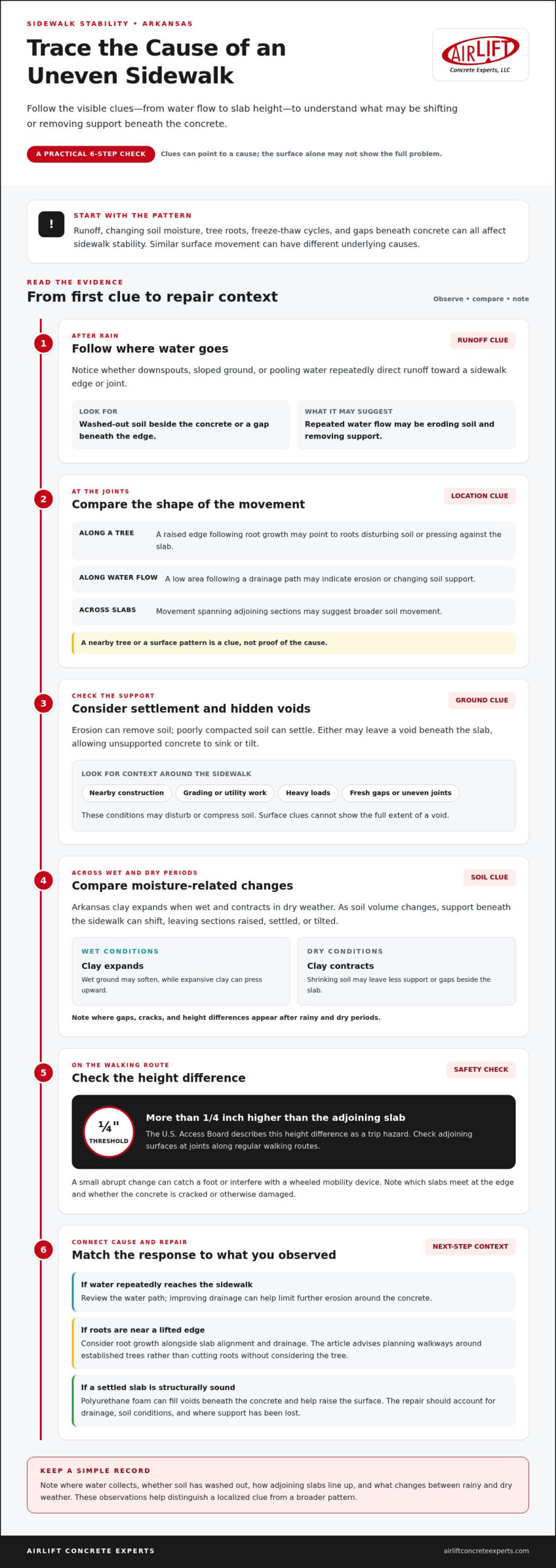
Rainwater can alter the ground supporting a sidewalk, particularly where runoff repeatedly collects beside the concrete. Watching water flow and changes in the slab can help distinguish erosion from other causes.
Runoff can wash loose soil from beneath a sidewalk edge. Downspouts, sloped ground, or water pooling near a joint may repeatedly direct water to the same spot. Look for washed-out soil or a gap under the edge as clues to erosion. Tree roots may instead cause localized lifting along their growth path. These patterns can help pinpoint where movement began.
Erosion removes support, while poorly compacted soil is more likely to settle under a slab. Either can leave a void, causing unsupported concrete to sink or tilt. Poor drainage and compaction can therefore weaken the base and contribute to settlement. Nearby construction, grading, or utility work may also disturb the soil and change the support beneath the sidewalk.
Heavy loads can compress poorly supported soil beneath concrete. After nearby work, compare adjoining slabs and check for fresh gaps, uneven joints, or a newly lowered section. These changes may indicate settlement after soil disturbance, although surface clues cannot show the full extent of a void.
Soil can shift, compress, or shrink as its moisture changes. Wet conditions may soften poorly supported ground; dry conditions can reduce soil volume and leave gaps beside the slab. Repeated changes may make movement more noticeable over time. Check whether the low area follows a drainage path or spans several adjoining slabs, which may suggest broader soil movement.
Compare the sidewalk after rain with its appearance during dry weather. Note where water collects, whether it flows toward the concrete, and whether soil has washed out beside joints. A sidewalk slab more than 1/4 inch higher than the adjoining slab is described as a trip hazard, according to the U.S. Access Board. Treat a raised edge as a safety concern for people walking the route.
If a settled slab remains structurally sound, polyurethane foam can fill voids beneath it and help raise the surface. The repair should account for the underlying cause, including drainage patterns, soil conditions, and where support has been lost. Improving the water path can also help limit further erosion around the sidewalk.
Tree roots can disrupt soil beneath a sidewalk and push slabs upward. Because this can create a height difference that affects pedestrians, examine both the concrete edge and nearby trees.
Roots grow through soil in search of moisture and space. An expanding root beneath a walkway can press against the slab, lifting one section and creating a raised joint beside a lower slab. The lift may follow the tree’s direction rather than a drainage route. Look for a raised edge near a tree and changes along the same path.
Roots may also disturb the supporting ground before visibly lifting the concrete. Over time, this disturbance can contribute to slab movement or gaps between sections. A nearby tree is a clue, not proof of the cause. Compare the location and shape of the lift with drainage routes and soil conditions.
To reduce future movement, plan walkways around established trees and keep drainage from washing soil toward their roots. Treat nearby root growth as part of the landscaping plan rather than cutting roots without considering the tree. Monitor joints and surface gaps, since changes may indicate shifting ground or concrete.
The U.S. Access Board describes a sidewalk slab more than 1/4 inch higher than the adjoining slab as a trip hazard. Check adjoining surfaces at each joint, especially where a lifted edge crosses a regular walking route. A small abrupt change can catch a foot or interfere with a wheeled mobility device.
Responsibility depends on local rules and the sidewalk’s location. In many places, property owners are responsible for sidewalk concrete on their property, so review the applicable local requirements before arranging repairs. Street frontage alone does not determine responsibility; property boundaries and municipal rules may also matter.
Start prevention with regular visual checks. After heavy rain, look for pooling, soil washed from beside the walkway, and new gaps at joints. Keep surface water from flowing toward the slab, and address routes that repeatedly saturate the same ground. Where trees grow near concrete, monitor root growth and slab alignment together.
If a raised section creates a trip concern, note which slabs meet at the edge and whether the concrete is cracked or otherwise damaged. That information helps clarify whether the problem is localized or affects a broader stretch. For an uneven but sound sidewalk, sidewalk and driveway leveling can be a relevant repair option to explore.
Arkansas clay can change volume as its moisture changes, shifting the ground that supports sidewalk slabs. It may expand after wet weather and contract during dry periods. This movement can cause concrete sections to rise, settle, or tilt.
The sidewalk’s pattern offers useful clues. A slab shifting near a wet, poorly drained area may reflect changing soil support, while movement across adjoining sections may suggest broader ground changes. Compare the sidewalk after rainy and dry periods, and note where gaps, cracks, or height differences appear.
Expansive clay can press upward as it absorbs moisture. When the soil dries and contracts, it may leave less support beneath the concrete. This cycle can contribute to a sunken slab or an abrupt height difference between sections. One observation may not reveal the full pattern, so note where movement appears and whether it changes with wet or dry conditions.
Temperature changes also affect concrete. As temperatures rise and fall, concrete can expand and contract, stressing joints and adjoining sections. Check for cracks or gaps near joints as well as changes in slab height. Soil movement and temperature changes can occur together, so consider the surface pattern and nearby drainage when assessing possible causes.
Use a simple inspection routine after seasonal weather changes:
These observations can show whether movement is isolated or extends along a longer stretch. They can also help distinguish clay-related changes from a localized issue, such as a root beneath one section. Removing the concrete is not the only possible response to an uneven slab; the cause and the slab’s condition guide the repair.
When a slab is structurally sound but has settled, polyurethane foam can be injected beneath it to fill gaps and raise the surface. This addresses the space below the concrete rather than requiring removal of the entire section. If a sudden height difference creates a trip hazard, note its location and nearby joints as you consider next steps.
In Arkansas, observe where runoff reaches a walkway and whether water pools there after rain. Compare those observations with slab changes during wet and dry weather. Keeping these details can help clarify whether moisture-related soil movement is affecting the concrete and provide a useful starting point for assessing the sidewalk.
Water trapped in soil beneath a sidewalk expands when it freezes, pushing against the slab and surrounding ground. Water expands by about 9% when it freezes. That pressure can lift concrete; when ice melts, the soil may settle again, leaving sections at different heights.
Freeze-thaw cycles can change support beneath a walkway. Water may enter a joint, freeze, and press against the slab edge. After thawing, the water may drain away or loosen soil, disturbing the ground below. Repeated movement can leave a raised edge, sunken section, or new gap between adjoining slabs.
Freeze-thaw damage can occur alongside erosion and drainage problems. A downspout sending water toward a sidewalk joint can keep the soil damp, while runoff may carry loosened material away. When water freezes, expansion can lift the slab. After thawing, weakened or missing soil may no longer support it evenly, changing both the ground and the concrete.
You can track these changes without disturbing the slab. After a thaw, compare adjoining sections and note new gaps, cracks, or height differences. Check whether movement follows a joint or appears beside a water path. Repeat the observation after another freeze-thaw period to see whether the same area changes again.
These observations help distinguish a localized change from movement across multiple slabs. One lifted edge may point to pressure beneath that section; a longer uneven stretch may indicate broader soil disruption. Either pattern deserves attention if it affects a regular walking route or creates a trip hazard.
Drainage maintenance can reduce water reaching sidewalk joints. Keep runoff from repeatedly flowing toward the same slab edge, and clear debris that blocks the route water should take away from the walkway. After winter, inspect the concrete again. This helps you spot new lifting or erosion before the uneven surface becomes harder to navigate.
Repair choices depend on the slab’s condition and the support beneath it. If the concrete is sound but has shifted, filling the gap below it can help restore a more even surface. Cracked or badly damaged sections may need a different approach. Identifying the cause, such as trapped water, erosion, or soil movement, helps match the repair to the problem.
A sidewalk can look solid even when its base has lost support. A void is an open space beneath the concrete slab. It can form when soil washes away, settles, or was not compacted properly. Without support, the slab may sink, tilt, or crack under everyday use.
Some causes leave visible clues. A sunken section beside a downspout may point to runoff carrying soil away; a gap near recent grading or utility work may indicate disturbed ground. Poorly compacted soil can produce a similar dip. These signs help narrow down the cause, but the visible edge cannot show the void’s full shape.
Voids also affect how a slab responds to weight. Supported concrete transfers pressure into the ground below. Without that contact, a section can flex or move under footsteps, carts, or other loads. Watch for a new rocking sensation, a widening joint, or a changed height where slabs meet. These changes can signal lost support, not just a surface flaw.
Use a simple observation checklist before arranging repair:
Each clue points to a different part of the problem. Runoff may indicate erosion; disturbed soil may suggest a changed or poorly compacted base. A void explains why the concrete lacks support, but the source of the gap matters too. Identifying the cause helps determine whether filling the void and lifting the slab is suitable or whether damaged concrete needs more extensive work.
If a settled slab remains structurally sound, polyurethane foam can be injected through small holes to fill voids and raise the concrete. This targets the space beneath the slab instead of removing the entire section. The slab’s condition, access, and extent of lost support help guide the repair. If the concrete is extensively cracked, lifting alone may not address the damage.
When a sidewalk feels unstable or a gap is growing, document the location and nearby signs of erosion or ground disturbance. Discuss options for a settled sidewalk and the support beneath it. Clear observations can help connect the visible movement to the void’s likely cause.
Airlift Concrete Experts provides polyurethane concrete leveling for settled sidewalk slabs that have lost support. Expanding polyurethane foam is injected beneath the concrete to fill voids and raise the slab. This can suit an uneven sidewalk when the concrete remains structurally sound. If a slab is badly cracked or damaged, lifting alone may not address the full problem.
To discuss what may be happening beneath an uneven section, note where the slab has settled, any visible gaps, and nearby drainage changes. These details help focus an assessment on the cause and whether concrete raising is appropriate.
Contact Airlift Concrete Experts to discuss your uneven sidewalk and polyurethane concrete leveling options.
Understanding what causes concrete sidewalks to become uneven gives you a useful starting point. Next, determine whether the slab can be raised or needs another repair. Note where the walking surface changes, whether adjoining sections have moved, and what conditions surround the affected area. These details can help focus the assessment on the specific sidewalk and its support.
Airlift Concrete Experts provides polyurethane concrete leveling and concrete raising for settled surfaces, as well as commercial concrete lifting. The right approach depends on the slab’s condition and the support beneath it. An assessment connects the visible symptoms with a practical repair option.
If an uneven sidewalk is affecting safe access around your property, contact Airlift Concrete Experts to discuss your next step. A steady, informed plan can help you move forward with greater confidence and make the walkway easier to use.
If you’re asking what causes concrete sidewalks to become uneven, start with changes in the soil beneath the concrete. Water can wash soil away, moisture changes can alter soil volume, and roots or freeze-thaw cycles can shift slabs. Nearby grading or utility work may also disturb the base. Note whether the concrete has risen or sunk, then compare its position with drainage paths, nearby trees, and adjoining slabs.
A sunken sidewalk can often be raised by filling the unsupported space beneath it, provided the concrete remains structurally sound. Polyurethane foam injection delivers expanding foam beneath the slab through small drilled holes, which are patched after lifting. The repair plan depends on the slab’s condition, access, and where support has been lost. Extensive cracking or broken concrete may require a different approach.
Common causes include eroded or poorly compacted soil, changing moisture, expansive clay, tree roots, and freeze-thaw movement. Nearby work can also change how firmly the ground supports a sidewalk. Understanding what causes concrete sidewalks to become uneven helps you assess the pattern: one raised corner differs from a long, gradual dip. Note where the uneven area begins and ends to capture clues about the underlying issue.
Growing roots can press against a sidewalk from below or disturb the soil supporting its edge. This pressure may lift a section; uneven support can also stress the concrete and contribute to cracks. Look for a raised joint or crack near a tree, then compare the affected area with the direction of visible roots. Avoid cutting roots as a quick fix, which can harm the tree while leaving the sidewalk’s support problem unresolved.
Water expands by about 9% when it freezes, which can push soil and sidewalk sections upward. When the ice melts, disturbed soil may settle, leaving the slab uneven. Water trapped near joints can make this cycle more noticeable. After a freeze and thaw, compare the same sidewalk edges and joints. New gaps or a changed slab position can help show where movement occurred.
Runoff directed toward a sidewalk can carry away soil and reduce support beneath the slab. A downspout repeatedly emptying beside one joint is a clear example to investigate. Check where water flows during rain, whether it pools beside the concrete, and whether soil has washed away near an edge. Redirecting surface water away from the walkway can help limit further erosion.
Repair options depend on whether the concrete is sound and how much support it has lost. Polyurethane foam injection can fill voids and raise a settled slab; replacement may be appropriate if the concrete is badly damaged. The slab’s condition, not just its height, is central to the decision. Check for extensive cracks, broken edges, or movement across several sections, since these details affect which repair approach fits.

 Call Now