
Concrete leveling for apartment complexes can address uneven sidewalks, walkways, and other settled slabs that create trip hazards. According to the U.S. Access Board, vertical changes over 1/4 inch on surfaces such as sidewalks can pose challenges and dangers to people with disabilities in the United States. Raising an intact, sunken slab can help restore a more even walking surface and reduce one preventable property concern.
For apartment owners and managers in Little Rock, concrete leveling for apartment complexes is about more than appearance: residents, visitors, and staff all rely on safe routes across the property. Start by identifying settled areas, how each space is used, and whether the slabs are suitable for lifting.
This guide explains how concrete lifting may help with trip hazards, how mudjacking compares with polyurethane lifting, and what can influence project timing and a return to service. You’ll also learn when lifting may be a fit compared with replacement, so you can make a more informed maintenance decision for your property.
Yes. Raising settled concrete can reduce a trip hazard by bringing uneven slab edges closer to level. Inspect walking routes, parking areas, and pool decks, then prioritize repairs according to how the spaces are used and the condition of the slabs.
Apartment owners may be liable for injuries caused by improperly maintained concrete on their property. A raised walkway edge, for example, can catch a resident’s foot or obstruct a rolling cart. Concrete leveling for apartment complexes can address settlement when a slab remains suitable for lifting, reducing a specific hazard without eliminating every property risk.
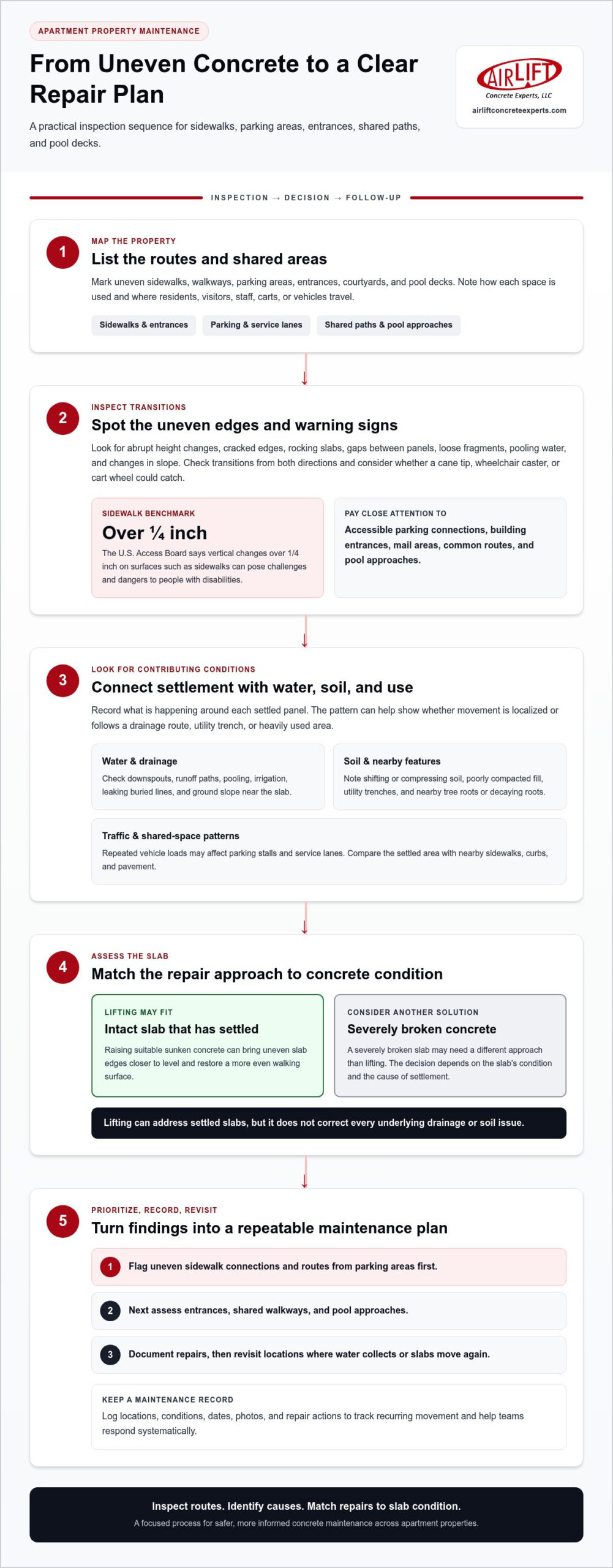
Look for abrupt height changes, cracked edges, rocking slabs, and gaps between adjoining panels. Inspect routes connecting building entrances, mail areas, parking, and shared amenities. Record each location and its condition, then prioritize the routes residents use most. A maintenance log with dates, photos, and repair actions helps teams track recurring movement and respond systematically.
Different repair methods address settled slabs in different ways. Mudjacking pumps cement-based slurry beneath concrete to fill voids and raise the slab. The repair decision should account for the slab’s condition and the area’s use. Severely broken concrete may need a different solution than an intact panel that has settled evenly.
According to the U.S. Access Board, vertical changes over 1/4 inch on surfaces such as sidewalks can pose challenges and dangers to people with disabilities in the United States. That benchmark makes sidewalk transitions a practical inspection priority, especially along routes connecting accessible parking, entrances, and common areas.
Walk the property at a steady pace and examine each transition from both directions. Check whether a cane tip, wheelchair caster, or cart wheel could catch on an uneven edge. Note surface cracks, loose fragments, pooling water, and changes in slope. These signs can help distinguish an isolated raised joint from broader settlement along a route.
Review pool decks separately before the swimming season opens. Wet surfaces, moving furniture, and frequent trips to the pool make abrupt slab edges important to address. Schedule a visual inspection before opening, mark settled panels, and include adjacent paths. Leveling suitable areas can help reduce tripping hazards around the pool.
For a clear maintenance sequence, rank findings by foot traffic and access needs. First, flag uneven sidewalk connections and routes from parking areas. Next, assess entrances, shared walkways, and pool approaches. Then document repairs and revisit locations where water collects or slabs move again. This gives property teams a practical record and helps focus attention on concrete safety.
Yes, settled parking lot slabs can often be lifted if their condition is suitable for repair. Identifying why they moved helps property managers address the cause as well as the uneven surface.
Concrete settles when soil beneath a slab shifts, compresses, or loses support. On an apartment property, poorly compacted fill beneath a parking stall may compress under repeated vehicle loads. Water can also wash soil from beneath a slab if drainage directs runoff toward its edge. Note where settlement appears and whether water or traffic patterns could explain it.
Look for clues across the whole parking area. A slab sinking beside a downspout may point to concentrated runoff, while a depression along a utility trench may follow backfilled soil. Leaking buried lines can soften or wash away supporting soil. Compare the affected panel with nearby sidewalks, curbs, and pavement to see whether movement follows a specific route.
Tree roots can also affect the ground around concrete. Roots may push against a slab, while decaying roots can leave voids beneath it. These causes can create different surface patterns, so record cracks, tilted panels, drainage paths, and nearby landscaping. This inspection helps distinguish localized settlement from movement across several common areas.
Shared spaces face different pressures than a single parking stall. Delivery vehicles may repeatedly cross a service lane, while residents walk along sidewalks beside landscaped beds. Irrigation or roof drainage can saturate soil near these routes. Inspect slab edges, nearby downspouts, and ground slope for conditions that may undermine support.
HOA common areas also include entrances, courtyards, and paths between buildings. Settlement near an entrance may result from soil movement beside the foundation, while a low courtyard panel may collect runoff. Note whether concrete tilts toward a doorway, drain, or planting bed. These details help property managers decide which areas need attention first.
Lifting can restore support beneath suitable slabs, but it doesn’t correct every underlying drainage or soil issue. Address the source of water movement where practical, then assess whether the concrete remains intact enough to raise. Replacing a severely broken panel may be more appropriate than lifting it. For a parking area with settled slabs, review options for uneven parking lot concrete alongside the surface and drainage conditions.
For an uneven slab, the choice depends on its condition and the cause of settlement. Compare lifting with replacement by checking whether the concrete remains intact.
Concrete lifting raises an existing slab by filling space beneath it and restoring support. For suitable concrete, this can avoid removing and disposing of a sound slab. For example, an intact pool deck panel that settled evenly may be a candidate for lifting. The repair restores its position while keeping the slab in place.
Replacement often involves breaking out the old slab, preparing the base, and placing new concrete. This can affect access to a shared area during the work and curing process. Polyurethane foam injection uses small access holes rather than removing the entire panel. It can make sense when preserving serviceable concrete matters to residents and property operations.
Leveling is often suitable when existing slabs are intact and not severely broken. Check for widespread cracking, crumbling edges, or separated sections. A settled walkway panel with a sound surface differs from one fractured across its width. The extent and pattern of damage help determine whether lifting can address the problem.
Examine the slab and its surroundings before choosing a repair. Check whether adjacent panels are stable, whether the surface drains properly, and whether settlement is localized. A sinking section beside a stable panel may be suitable for lifting. If the concrete has extensive damage, replacing that section may be more appropriate than raising it.
Consider the area’s function, too. A pool deck, entrance path, or loading area may have different access needs and surface demands. List the affected panels, note their condition, and identify how residents or staff use each space. These observations provide a practical basis for comparing repair options.
Concrete replacement often costs double or more than concrete lifting. That comparison makes lifting worth considering for suitable slabs, but the surface condition remains central. A lower-cost repair is not useful if the concrete is too damaged to lift effectively. Compare the repair scope, slab condition, and underlying settlement before choosing.
Replacement provides a new slab, while lifting repositions existing concrete. Replacing a damaged panel may address deterioration that lifting cannot correct. Lifting may suit a solid slab that has settled but remains usable. For example, compare a cracked, crumbling parking-area panel with an intact walkway slab that has dropped at one edge.
Before deciding, document the affected area, visible damage, and likely source of movement. Then consider whether the slab can remain in service, whether its base needs support, and how each option affects access. This review helps property teams choose based on the concrete’s actual condition rather than assuming every uneven surface needs replacement.
Apartment sidewalks, driveways, and slabs can be raised using mudjacking or polyurethane foam lifting. The right method depends on slab condition, site access, and how residents use each area.
Polyurethane lifting begins with small access holes drilled through the settled slab. Technicians inject foam beneath the concrete, where it expands and fills voids. As the foam supports the slab, controlled injection raises it toward the surrounding surface. The placement and amount of material depend on the slab’s position and condition.
For owners, polyurethane foam injection can suit a settled sidewalk section or driveway panel that remains intact. The closed-cell structural foam is waterproof and chemical-resistant, does not leach chemicals, and becomes inert after curing. Before choosing this approach, identify affected sections and consider drainage, traffic, and nearby structures. These details help determine where lifting is appropriate.
Mudjacking, also called slabjacking, raises settled concrete by pumping cement-based slurry beneath the slab. The slurry fills voids and stabilizes the base, helping lift the concrete. Crews drill access holes, pump material through them, and patch the holes after raising the slab. This method can address sunken sections when the existing concrete remains suitable for lifting.
Compare access needs and the repair area with the property’s daily use. Work beside an apartment entrance may require a different access plan from a broad driveway. The slab’s size, settlement pattern, and underlying voids affect how the work proceeds. Consider both the surface and the support beneath it when planning a repair.
For shared sidewalks, driveways, and slabs, assess the concrete’s condition first. An intact panel with a settled edge presents a different repair case from concrete with extensive breaks. Note the affected area, adjoining slab levels, drainage, and access for equipment. Those observations help owners compare foam lifting with slurry-based mudjacking.
Consider resident access, too. A sidewalk near building entrances carries foot traffic, while a driveway must accommodate vehicles. Marking repair sections and planning temporary routes can help limit disruption during the work. For a pool deck, include the surrounding walking surface in the assessment, since several settled panels can create connected trip hazards.
Lifting does not replace severely damaged concrete. If sections are badly broken, replacement may be more appropriate. For sound slabs, assess how polyurethane foam injection fills voids, supports the base, and fits the site. This practical review helps property teams choose a repair suited to the concrete and its use.
Project timing depends on the number of slabs, their locations, and site access. For occupied Little Rock properties, a clear work sequence helps managers plan resident routes and reduce disruption.
Property managers can compare contractors by reviewing applicable license credentials in state and local records, then matching each contractor’s work scope to the project. Compare the onsite assessment, proposed action plan, written quote, and stated return-to-service instructions.
Planning starts with identifying affected walkways, parking sections, and entrances. Airlift Concrete Experts assesses the site, develops a repair plan, and provides a free estimate. Managers can then coordinate the work area, resident notices, vehicle access, and alternate routes before the crew begins.
The work sequence follows the selected repair method and the site layout. Crews access the concrete, lift the settled sections, and finish the repair. The number and location of slabs, equipment access, and the repair material shape the schedule. A single walkway section presents a different planning task than connected parking areas beside occupied buildings.
Return to service depends on the repair method and the surface’s readiness for use. Managers should use the crew’s stated reopening point, then remove barriers only when the repaired area is ready. For example, keep residents routed around a treated entrance until the work area is cleared for foot traffic.
Safety planning begins before equipment arrives. Mark the work zone, separate pedestrians from active equipment, and keep alternate paths clear. For a parking lot, identify vehicle access and plan a route around the repair sections. For a walkway, post directions at both ends so residents don’t enter the work area. Include accessible routes in the plan.
Resident notices should identify the affected surface, planned work sequence, and temporary route. A notice at the building entrance and parking area helps residents see changes before reaching the repair zone. Managers can also coordinate deliveries and maintenance visits around restricted areas.
Warranty and service coverage are separate from scheduling. Review the written terms for the covered repair, applicable conditions, and any limits on coverage. Keep the project quote, completed work details, and maintenance records together. For Little Rock properties, define the service area by the specific buildings and concrete sections included in the project scope.
For a property assessment and project quote, schedule an onsite concrete leveling evaluation.
Airlift Concrete Experts helps apartment property teams in Little Rock and across Arkansas address settled concrete through polyurethane concrete leveling and concrete raising. Commercial concrete lifting can restore suitable walkways, parking areas, and shared slabs. The company also provides interior floor leveling for settled indoor floors and pool deck repair.
Consider this service when an inspection identifies sunken concrete affecting resident access or property use. Share the affected areas, slab condition, and access needs so the repair assessment can focus on the right approach. For an apartment property in Little Rock with settled concrete, contact Airlift Concrete Experts to discuss the site and next steps.
Make the next decision using a clear record of your property’s needs. Note the affected areas, how residents use them, and which repairs to prioritize. This information provides a practical starting point for discussing concrete leveling for apartment complexes and planning work around daily operations.
Airlift Concrete Experts provides polyurethane concrete leveling, concrete raising, and commercial concrete lifting for property repairs. Request a free inspection and estimate to discuss your site, the concrete’s condition, and the areas you want to address.
Contact Airlift Concrete Experts to discuss your apartment property’s concrete concerns. A considered repair plan can help you move forward with confidence.
Yes, sidewalk slabs across an apartment property can be assessed for leveling. Start by mapping each affected stretch, including routes between building entrances, mail areas, and shared amenities. Note where concrete has settled, cracked, or shifted beside another panel. This property-wide view helps organize work by location and access instead of treating every uneven section as an isolated repair.
Airlift Concrete Experts provides commercial concrete lifting for apartment properties and HOA common areas. The company serves Malvern, Hot Springs, Little Rock, Cabot, Conway, Benton, Bryant, North Little Rock, Sherwood, Jacksonville, and Hot Springs Village. Identify the affected buildings or shared areas and prepare a list of concrete concerns to guide the project discussion.
Record each uneven area and its location, then prioritize paths residents use to reach entrances, parking, and common spaces. Photos can show how slab edges or cracks change over time. Keep a record of temporary barriers or route changes, too. Airlift Concrete Experts provides sidewalk and driveway leveling for residential and commercial properties across Arkansas.
Cracks don’t automatically rule out lifting; the slab’s overall condition matters. Note whether cracks are limited to the surface or whether sections are broken, crumbling, or moving independently. A settled panel with a stable surface differs from fragments that no longer function as one slab. Share these observations during an assessment so the repair approach accounts for settlement and visible damage.
There isn’t one per-square-foot figure that fits every apartment property. Airlift Concrete Experts provides a free inspection and estimate based on the project scope and site conditions. Managers can prepare a list of affected areas to help define the estimate.
The estimate reflects the repair scope, including affected slab areas, their condition, and access for the work. Connected walkway panels present a different project from scattered sections across a parking area and pool deck. Document locations, visible damage, access constraints, and how each area is used to help define the assessment.
Polyurethane foam injection raises concrete by injecting expanding foam beneath the slab to fill voids and lift it. Traditional mudjacking pumps cement-based slurry below the concrete, then patches the access holes after lifting. Foam used for leveling is water-resistant. For an apartment property, compare the methods by slab condition, the repair area, and the materials used to support the settled concrete.
Inspect the surface, edges, and adjoining panels. Concrete that remains intact and has settled may be suitable for lifting, while severely broken or crumbling sections may call for replacement. Record whether cracks cross the slab, pieces have separated, or neighboring panels have also moved. This review gives property managers a clearer basis for discussing the repair scope and next steps.

 Call Now