

Can polyurethane safely lift a sunken driveway, or does uneven concrete mean it’s time for a full replacement? The answer depends on the slab’s condition and the cause of the settlement. Polyurethane driveway leveling may suit a slab that has settled but remains in sound condition. Severely cracked or crumbling concrete may need a different solution.
Uneven sections can make parking and walking difficult, so it’s understandable to want a clear answer before committing to a repair. A professional assessment can help determine whether the slab is suitable for lifting and what visible conditions may be contributing to the settlement.
This article covers signs that foam lifting may be appropriate, what a thorough assessment and injection process should involve, and what to ask when comparing contractors. It also considers Arkansas driveways and how to find a provider serving your community, so you can weigh your options with clearer information.
An uneven driveway can make the transition from the street to the garage uncomfortable, while low spots may collect water after rain. These signs are worth investigating, but they don’t explain why the concrete moved or whether it can be lifted.
Polyurethane driveway leveling is the professional process of raising suitable sunken concrete by injecting high-density foam beneath the existing slab. It lifts an existing driveway section rather than replacing it with new concrete. This is one approach to concrete leveling, a broader method for raising settled slabs. An assessment can help determine whether the driveway’s condition and settlement make lifting a reasonable option.
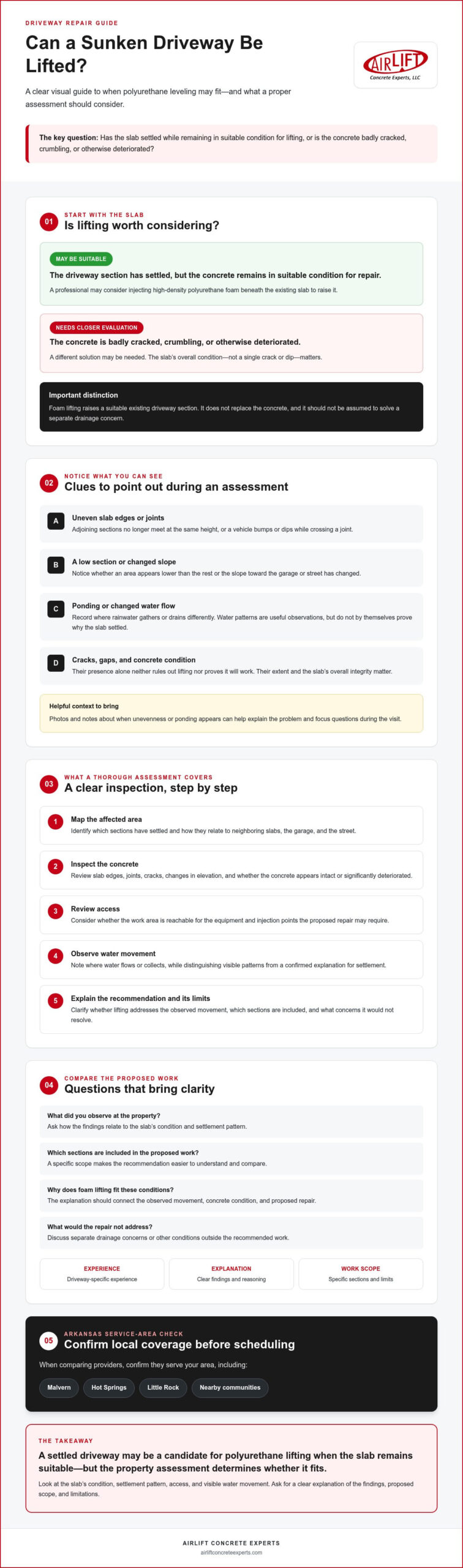
Look for adjoining slab edges that no longer sit at the same height, a section that appears lower than the rest, or a noticeable change in slope toward the garage or street. You may feel a bump or dip as you drive across a joint. These observations can help pinpoint areas to inspect, but they don’t establish the cause.
Notice where rainwater gathers and whether it drains differently than it used to. Ponding may indicate a low area or a change in surface slope, but the water pattern alone can’t explain what is happening beneath the slab. Cracks and gaps also deserve attention. Their presence doesn’t automatically rule out lifting or prove that lifting will work. Their extent and the slab’s overall condition matter.
A contractor may consider lifting when an existing driveway slab has settled and remains in suitable condition for repair. The assessment should distinguish a slab that has moved from concrete that is badly cracked, crumbling, or otherwise deteriorated. A sunken section may be a candidate for raising, while other damage may call for a different plan.
Ask the contractor to explain what they observed, which sections they propose to address, and why foam lifting fits those conditions. Don’t assume every dip, crack, or puddle has the same cause, or that leveling will resolve a separate drainage concern. Suitability and likely results should be discussed after an assessment at the property.
A sound recommendation starts with what the contractor can observe at the property, not an assumption about why the slab moved. For polyurethane driveway leveling, the site conditions help determine whether a driveway slab is a candidate for lifting.
A useful assessment follows a clear sequence:
Uneven joints can show where adjoining sections no longer meet at the same height. Cracks can help describe the slab’s condition, but their presence alone doesn’t determine whether lifting is appropriate. The contractor should consider the concrete’s overall integrity before recommending injection. Raising a sound, settled slab is different from addressing concrete that is badly damaged.
During the visit, point out where a vehicle bumps or dips and share concerns about walking, parking, or water collecting. Ask the contractor to document the affected sections and explain which observations support the recommendation. A clear record makes it easier to compare the findings with the proposed work scope.
The inspector can observe whether water runs toward the house, crosses the driveway, or remains in a low spot. Those patterns are useful clues, not proof of what caused the slab to settle. A contractor should explain what is directly visible and identify a cause only when the property evidence supports that conclusion.
Local weather and ground conditions may be relevant, but they shouldn’t be used as a one-size-fits-all explanation. Ask how any soil or drainage factor relates to your specific driveway and what supports that assessment. For background on injected foam’s use in slab lifting, the Oregon DOT study on polyurethane slab jacking offers a transportation-agency perspective. It doesn’t replace an inspection of your property.
If you’re comparing providers, review their driveway leveling information and ask how they assess slab condition, access, and water movement before recommending work.
Polyurethane driveway leveling has a focused purpose: raising an existing concrete slab that has settled, if its condition and site circumstances make lifting appropriate. It doesn’t correct every driveway defect. A dip, crack, and puddle may appear together, but they can reflect different issues and may not share a single fix.
Keep these three concerns distinct as you review a proposal:
Extensive cracking, crumbling concrete, or other significant slab deterioration can affect whether a section is suitable for lifting. A contractor should explain how the observed damage influences the recommendation rather than treating every uneven surface as a foam-lifting job.
Persistent water concerns also deserve a separate look. Ask whether the proposal addresses only the slab’s position or whether a drainage issue remains outside its scope. Find out what specific findings would make lifting unsuitable for your driveway, and request an explanation if the recommendation changes because of the concrete’s condition or site factors.
The intended goal is to correct the position of a suitable settled slab. Leveling doesn’t create new concrete, repair every type of surface damage, or independently resolve underlying site conditions. An academic evaluation of polyurethane foam for pavement offers further technical context about foam applications, but research cannot determine what your particular driveway needs.
Before approving work, ask for the scope and limitations in writing. It should identify which driveway sections are included, what the proposed lifting is intended to address, and which concerns may remain afterward. Ask whether the contractor recommends any follow-up observation, especially if water movement or other site conditions are part of your concern.
Clear expectations help you judge the proposal by its actual purpose. A suitable lifting plan addresses the settled slab identified for repair. It shouldn’t be presented as a promise that every crack, puddle, or future movement will disappear.
A little preparation can make an assessment more useful and help you understand the proposed work. Before discussing polyurethane driveway leveling, collect what you’ve noticed, make the affected area accessible, and prepare questions about the contractor’s findings and plan.
Ask what the contractor observed that supports lifting, which sections are included, and what the process is intended to address. Clarify any limits, what access the crew will need, and how the contractor will explain the findings if the slab isn’t suitable. A clear answer should connect the recommendation to your driveway, not just describe the method in general.
During the assessment, use this short checklist:
Photograph affected sections from a few angles before the visit, and note where water flows or stands after rain. Share any known drainage concerns, prior repairs, and changes you’ve noticed around the driveway. These details provide helpful context, but the contractor still needs to inspect the slab and conditions firsthand.
Before work, clear the area as directed and follow the contractor’s preparation instructions for your property. Don’t assume a general weather rule applies to your job. Ask whether conditions affect the plan or timing. Also confirm that the provider serves your location, whether you’re in Malvern, Little Rock, or a nearby community. Coverage can vary, so verify it directly before making arrangements.
For a broader explanation of the method, see the polyurethane concrete leveling guide. If you’re in the Central Arkansas service area, you can ask Airlift Concrete Experts about driveway leveling and what an assessment of your property would involve.
A contractor should be able to explain what they see at your driveway and connect those observations to the work they recommend. Experience with driveway slabs matters because a proposal should account for the affected concrete, its condition, and the repair area rather than rely on a promise that could apply to any property.
Airlift Concrete Experts is a family-owned and operated Arkansas business that provides polyurethane leveling for driveways and other sunken concrete slabs. Before arranging an assessment, confirm that the company serves your address. Ask specifically about Malvern, Hot Springs, Little Rock, or your nearby community, since availability should be verified for your location.
Look for a clear account of the observed settlement and why lifting is recommended for those sections. The proposal should define the included work, identify relevant access needs, and explain limitations or follow-up recommendations. It should also distinguish what lifting is intended to address from concerns that may remain outside the scope.
Ask direct questions if any part is unclear: Which sections will be addressed? What observations support the recommendation? Are there visible drainage or slab-condition concerns that affect the plan? If a contractor makes broad performance promises without explaining the site findings, request specifics. A practical proposal describes the work and its boundaries without guaranteeing an outcome that hasn’t been established through inspection.
For additional context about concrete lifting services in the region, review expert concrete lifting in Malvern and Little Rock. Use the information to prepare questions, then compare any recommendation with the conditions at your own property.
When you contact a provider, describe where the driveway has settled and what you’re noticing, such as an uneven transition, a low section, or water collecting in a particular area. Mention prior repairs or other concerns that may help the contractor understand what you want assessed. Then confirm that your address is within the current service area and ask what information or access the assessment requires.
That conversation can help establish whether an assessment at the property is the right next step. It doesn’t commit you to a repair. You can contact Airlift Concrete Experts about a driveway assessment to discuss what the review would involve.
A settled driveway isn’t automatically a candidate for lifting. The slab’s condition, settlement pattern, and water movement all matter, so a professional assessment can help clarify what the visible signs mean. If lifting is appropriate, make sure the proposal explains the work area, its limits, and any remaining concerns.
Airlift Concrete Experts provides polyurethane leveling and raising for sunken concrete, including driveway work. The company serves communities including Malvern, Hot Springs, Little Rock, Cabot, Conway, Benton, Bryant, North Little Rock, Sherwood, Jacksonville, and Hot Springs Village. Confirm current service coverage for your address before arranging an assessment.
Share what you’ve noticed and ask what an assessment would involve. Request a driveway assessment from Airlift Concrete Experts to take a practical first step toward understanding your options. Clear findings and a defined scope can help you decide how to move forward.
Yes, professional foam injection can lift some settled driveway slabs, but suitability depends on the concrete’s condition and the site. An assessment helps the contractor examine how the slab has moved, its cracks or damage, and other visible concerns before recommending work. A low section alone doesn’t confirm the cause or show that lifting is appropriate. Ask the contractor to explain the findings and any limitations before deciding how to proceed.
Polyurethane driveway leveling involves a professional injecting high-density foam beneath a suitable settled concrete slab to raise it. The foam is placed through injection points, and the contractor determines the repair plan after inspecting the driveway. The number and placement of injection points, along with the sections included, depend on the specific site. This is a brief overview. A contractor can explain how the method applies to your driveway.
Cracks don’t automatically determine whether a driveway slab can be lifted. Their extent, the overall condition of the concrete, and the pattern of settlement all matter. A professional should inspect the driveway and explain whether the slab appears suitable, what the proposed work would address, and what limitations remain. Don’t assume lifting will repair every crack or resolve an underlying site concern. Ask the contractor to connect the recommendation to the specific condition observed.
The timing depends on the driveway, site conditions, and the planned work, so don’t assume a fixed duration. The size and condition of the affected sections, along with access needs, may factor into the schedule. Before approving the work, ask the contractor how long the specific project is expected to take and whether you’ll need to keep vehicles or foot traffic away from part of the driveway. Confirm any access restrictions directly with the provider.
Raising a settled slab may address its position, but it won’t automatically resolve every drainage problem. Discuss water that collects on the driveway or runs toward a particular area during the site visit. The contractor can observe water movement and explain whether the proposed leveling addresses the slab only or whether other concerns remain. Ponding is a useful observation, not proof of its cause, so ask what the inspection can establish about your property.
Airlift Concrete Experts is an Arkansas provider specializing in polyurethane concrete leveling and raising, including driveway work. Its service area includes Malvern, Hot Springs, Little Rock, Cabot, Conway, Benton, Bryant, North Little Rock, Sherwood, Jacksonville, and Hot Springs Village, along with nearby communities. Confirm current coverage for your address before arranging an assessment. Airlift focuses on lifting and leveling existing concrete, not new concrete construction. You can ask about an assessment for your driveway.
The right direction depends on the slab’s condition, how it has settled, and what an assessment at the property reveals. A suitable settled slab may be considered for lifting, while extensive deterioration or other site findings may change the recommendation. No single option fits every driveway. Ask the contractor to explain whether lifting is appropriate, what evidence supports that view, and what limitations or other concerns affect the plan. This gives you a clearer basis for deciding how to proceed.

 Call Now