

Concrete slabs, whether they’re part of your driveway, patio, garage, or sidewalks, rely on stable soil beneath them. While many homeowners focus on aesthetics and function when designing landscapes or installing irrigation systems, improper planning can inadvertently cause serious damage to concrete slabs.
1. Overwatering or Poor Irrigation Placement
Irrigation systems that direct water toward concrete slabs can oversaturate the soil beneath them. This creates expanding and contracting soil, which can cause slabs to sink, shift, or crack.
2. Large Trees and Shrubs Near Slabs
Tree roots and large shrubs can grow under or around concrete, displacing soil or exerting upward pressure on the slab. Over time, this can lead to uneven slabs or cracking.
If your landscaping slopes toward a concrete slab, rainwater and irrigation runoff will flow directly under it, eroding soil and creating voids. Even small voids can compromise slab stability, especially under heavy loads.
4. Soil Compaction Problems
Landscaping changes can disturb soil compaction. Adding mulch, soil, or decorative rocks near slabs without properly compacting the soil underneath may lead to uneven settling.
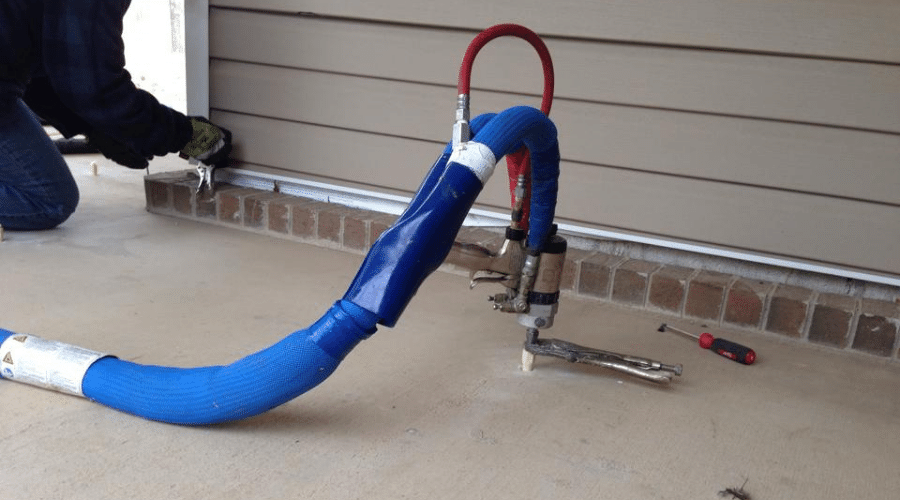
At Airlift, we know the soil beneath your concrete is just as important as the slab itself. Our polyurethane foam lifting process not only restores uneven concrete but also stabilizes the soil, addressing the root cause of settlement caused by landscaping or irrigation issues.
Benefits of Polyurethane Foam Lifting:
Whether your concrete slabs are sinking, cracking, or shifting, our trained technicians can provide a durable, long-lasting solution that protects your property and prevents future damage.
Prevent your landscaping or irrigation from damaging your concrete slabs. Contact Airlift Concrete Experts today for a free estimate and learn how we can restore and stabilize your slabs with precision and efficiency.

 Call Now