

When most people think of foundation problems, they imagine large cracks in concrete or a sinking slab, not the aftermath of cutting down a tree. But tree removal can indeed cause unexpected foundation issues, especially in places like Arkansas, where expansive soils are common.
Let’s break down why removing a tree can affect your foundation and how to avoid costly problems.
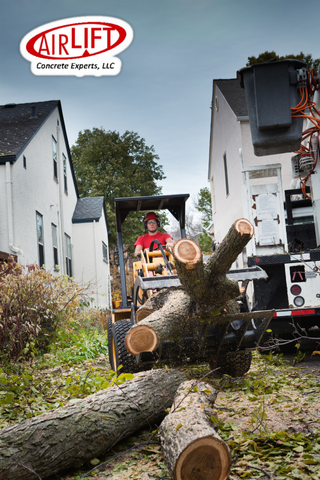
Trees — especially mature ones — soak up huge amounts of water from the surrounding soil every day. Their roots stretch outward in search of moisture, often extending well beyond the tree’s canopy. Over time, this can lead to drier, more compacted soil beneath and around your home.
When a large tree is suddenly removed, the moisture demand drops, and the soil starts to rebound. This process is called soil heave, and it can cause the ground to swell or shift in ways your foundation wasn’t designed to handle.
These issues can appear weeks or even months after the tree has been removed, especially if the soil was already unstable.
When a tree is present, the soil under your foundation is used to a certain water balance. Once that tree is gone, the soil begins to rehydrate, expand, and shift — especially if you have clay-rich soil, which is common in many parts of Arkansas.
This expanding soil exerts upward pressure on your slab or footing, leading to heaving, cracking, and potentially serious damage to your foundation.
Here are a few ways to protect your foundation if you’re planning to remove a large tree:
If you’ve noticed cracks, sloping, or any unusual changes in your home after a tree was removed, don’t wait. Airlift Concrete Experts utilizes precision polyurethane foam injection to lift and stabilize sinking foundations and concrete slabs — quickly, cleanly, and with minimal disruption.
Whether it’s the tree that’s still standing or the one that’s already gone, we’ll help assess the risk or repair the damage. Serving Arkansas homeowners with trusted foundation and concrete repair.

 Call Now