

After a heavy three-inch rainfall in Malvern last Tuesday, you might have walked outside to find water pooling just inches from your siding. It’s a stressful sight for any homeowner in Central Arkansas because you know that standing water is often the first step toward a shifting home. The relationship between your foundation and drainage is the most important factor in maintaining structural integrity. When water doesn’t flow away from your house, it saturates the soil and puts thousands of pounds of pressure on your basement or crawlspace walls.
We understand the worry that comes with spotting a new crack in your brickwork or seeing your interior doors start to stick. You shouldn’t have to fear a massive repair bill every time a storm rolls through the Natural State. This guide will show you how to protect your investment by identifying early signs of drainage failure and learning effective ways to divert water. We’ll also explain how a professional assessment can provide the peace of mind you need. If you’re ready to secure your property, Airlift Concrete Experts is here to offer a free inspection to ensure your foundation stays level and dry for years to come.
Foundation drainage is the specialized system designed to capture and divert water away from a structure’s base to prevent soil saturation. In Malvern and throughout Central Arkansas, water stands as the primary enemy of structural integrity. While a home might look solid on the surface, the interaction between the ground and the concrete footer determines whether the building remains level over the decades. When a home lacks a strategic balance of foundation and drainage, the structural components are forced to contend with environmental forces they weren’t designed to withstand.
The local geology plays a massive role in this struggle. Arkansas is known for its heavy red clay, a soil type that behaves very differently than the sandy or loamy soils found in other regions. This clay doesn’t allow water to drain freely; instead, it traps moisture against the foundation walls. This creates a cycle of instability that eventually leads to visible damage like wall rotation or floor heaving. Understanding how your home interacts with this soil is the first step toward a permanent solution.
Clay soil in the Little Rock and Malvern areas acts like a dense reservoir. Unlike sandy soils that allow rainwater to percolate down into the water table, clay holds moisture for extended periods. This results in the “sponge effect,” a phenomenon where the soil swells significantly when wet and shrinks drastically during dry spells. In some cases, high-plasticity clay can expand by as much as 10% in volume when saturated. This constant fluctuation creates a moving target for your home’s weight. As the soil shrinks during a dry Arkansas summer, it leaves voids beneath the concrete, which leads to foundation settlement and deep structural cracking.
When water is allowed to pool near a home, it significantly weakens the soil’s load-bearing capacity. Saturated ground becomes soft and unstable, meaning it can no longer support the thousands of pounds of pressure exerted by a residential structure. This often results in differential settlement, where one corner of the house sinks faster than the rest. Beyond the concrete itself, poor foundation and drainage management leads to excessive moisture in crawl spaces, which triggers mold growth and compromises indoor air quality. Many homeowners find that installing a French drain is a necessary step to intercept this subsurface water before it reaches the home.
Hydrostatic pressure is the force exerted by stagnant water against a foundation. If this pressure isn’t relieved through proper grading or drainage pipes, it can eventually cause basement walls to bow inward or crack. At Airlift Concrete Experts, we’ve seen how these forces can turn a minor leak into a major structural failure if the water isn’t given a clear path away from the property. Homeowners who notice new fractures appearing after heavy rains should consult our guide to foundation wall crack repair in Central Arkansas to understand whether the damage is cosmetic or a sign of serious settlement.
Managing water in Central Arkansas requires more than a single solution. In towns like Malvern and Benton, the rocky terrain of the Ouachita foothills creates unique challenges for foundation and drainage health. If your home sits on a slope, gravity sends thousands of gallons of runoff toward your crawl space or slab during a typical spring storm. A successful water management plan uses a multi-layered approach that addresses both surface runoff and subsurface saturation. You can’t rely on one pipe to do all the work. It takes a combination of gravity and mechanical systems to keep your soil stable and your foundation secure.
Standard gutters often overflow during the heavy thunderstorms common in Conway, which can drop 2 inches of rain in under 60 minutes. If downspouts dump water directly at the base of your home, they’re actually contributing to soil erosion and hydrostatic pressure. We recommend extending these lines at least 5 to 10 feet away from the structure. For homeowners who want to maintain curb appeal, underground bubbler pots offer a clean alternative to plastic surface extensions. These systems use a pop-up emitter that stays flush with the grass until water pressure forces it open, keeping your lawn easy to mow and your foundation dry.
Distinguishing between surface and subsurface solutions is vital for long-term stability. A French drain uses a gravel-filled trench and a perforated pipe to intercept groundwater before it reaches your footer. It acts like a hidden gutter for the soil. Conversely, surface swales are shallow, grassy valleys designed to redirect large volumes of sheet flow. While French drains are more labor-intensive to install, they’re often necessary for homes with high water tables or heavy clay. Swales are a cost-effective, natural-looking way to move water around the property without digging deep trenches, making them ideal for larger lots in the Malvern area.
Proper grading is the first line of defense. The “positive grade” rule states that the ground must slope away from your house. Specifically, you need a 6-inch drop over the first 10 feet of distance from the foundation. Many Malvern homeowners accidentally create water traps by piling mulch or building raised flower beds against the house. This traps moisture against the concrete and leads to wood rot or settlement. If you’re noticing standing water after a rain, a free inspection can help determine if your grading meets these essential standards. We look for these small details that others might miss to ensure your home stays dry and stable for years to come.
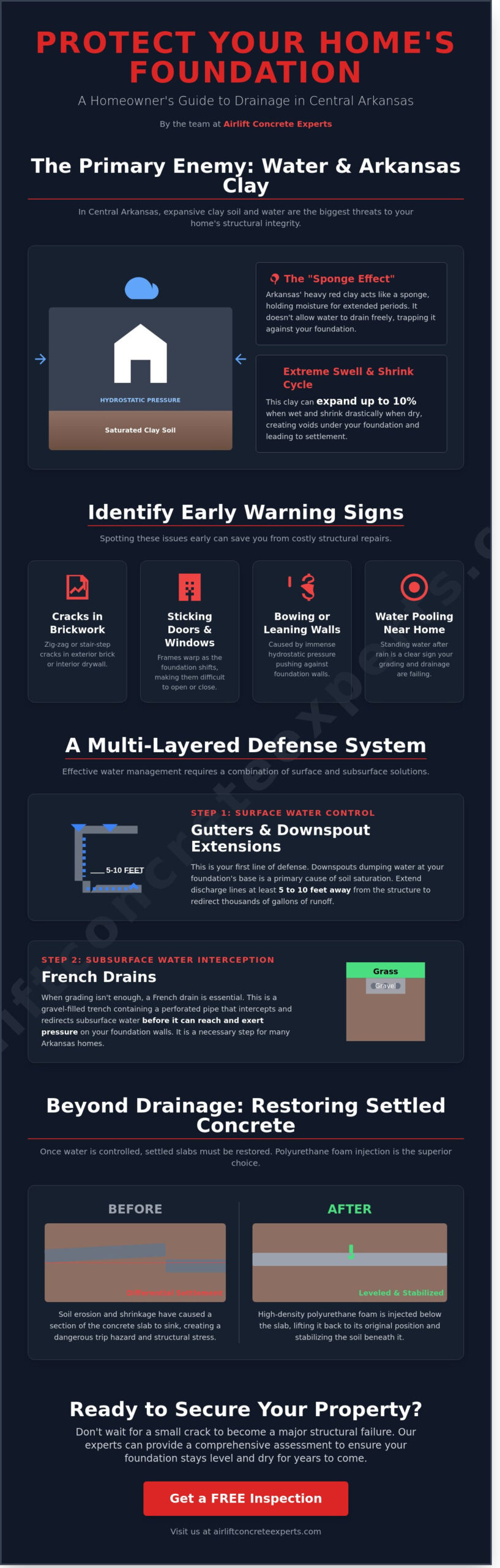
Detecting the early warnings of foundation and drainage issues in Malvern requires a keen eye for detail. Homeowners in Central Arkansas often face unique challenges due to the high clay content in the local soil, which expands and contracts aggressively with moisture changes. While a hairline crack might seem like a simple cosmetic fix, it often signals a deeper struggle between your home and the earth beneath it. Understanding the difference between surface-level wear and a structural threat is the first step toward protecting your investment.
Perform a “rainy day audit” next time a storm rolls through Hot Springs or Malvern. Put on your rain gear and walk the perimeter of your home while it’s actually raining. Look for water that cascades over the sides of gutters or pools within 5 feet of your exterior walls. If water sits in these areas for more than 24 hours after the rain stops, the soil is likely becoming oversaturated. This saturation softens the ground, leading to the type of soil settlement that necessitates searching for foundation leveling near me to correct the resulting tilt.
The outside of your home provides the most obvious clues regarding foundation and drainage health. Look for these three specific indicators:
Inside the home, the house frame acts as a sensitive scale, reacting to even the slightest shift in the foundation. If you notice doors that suddenly stick or windows that are difficult to latch, the frame has likely moved out of square. In older Central Arkansas homes, sagging floors repair near me is a common search for homeowners who discover that bouncy or uneven floors point to moisture buildup in the crawl space. This dampness weakens floor joists and creates musty odors that permeate the living area. These aren’t just inconveniences; they are signals that your home’s structural integrity is under pressure from poor water management. Identifying these signs early allows for a targeted foundation wall crack repair before the damage requires more extensive intervention.
Protecting your Malvern home from water damage starts with a clear plan. Central Arkansas soil, often heavy with clay, expands and contracts based on moisture levels. Managing foundation and drainage systems effectively keeps the ground beneath your slab stable and your crawlspace dry. Follow these steps to secure your home’s structural health.
You don’t always need a major excavation to see results. Place plastic or concrete splash blocks under downspouts to prevent soil erosion. Clear out any grass or mulch covering your existing drainage grates to ensure pipes can flow at full capacity. If you find small “low spots” near your porch or patio, a few bags of topsoil can prevent water from “ponding” against the concrete during the next Arkansas thunderstorm.
While DIY maintenance is great for prevention, repairing a failing foundation is a different task entirely. Attempting to lift a sunken slab or patch major structural cracks without professional equipment is dangerous and usually temporary. Surface fixes won’t help if the soil deep underground has already washed away or compressed. If your floors are uneven or your brickwork is gapping, it’s time to find reliable foundation repair near me for a specialized assessment. We use advanced methods like polyjacking to stabilize soil and level concrete with precision that traditional DIY methods can’t match. Before hiring anyone for structural work, reviewing a checklist to help you select a qualified foundation repair specialist in Malvern and Central Arkansas can protect you from unqualified contractors and ensure you get a permanent solution.
Don’t wait for a small crack to become a total structural failure. Contact Airlift Concrete Experts today for a professional inspection of your Malvern property.
Managing water is vital, but it won’t undo the physical damage already done to your property. Once your foundation and drainage issues lead to a settled slab, redirecting a downspout or installing a French drain won’t lift several tons of concrete back to its original height. You need a structural solution that addresses the empty space left behind by soil erosion. Water management stops the problem from getting worse, but restoration requires a professional touch.
Polyjacking is the modern, high-tech answer to sunken concrete. We inject high-density polyurethane foam through small, penny-sized holes drilled into the affected area. As the foam expands, it fills every hidden gap and lifts the concrete with surgical precision. It’s a permanent fix that addresses the root cause of instability without the mess of traditional demolition. This method is fast, reliable, and keeps your home’s exterior looking its best.
When heavy rains wash away the supporting soil under your driveway, sidewalk, or porch, they leave behind dangerous air pockets. High-density foam fills these voids and hardens into a rigid, lightweight structure that supports the weight of the slab. The foam also acts as a permanent, waterproof barrier. It won’t wash away during the next Arkansas thunderstorm, and it won’t degrade over time like organic soil.
Many homeowners discover that polyjacking near me is a far better alternative to mudjacking. While mudjacking uses a heavy sand and cement slurry that adds more weight to already failing soil, our specialized foam adds almost no weight at all. This prevents future sinking and ensures a more stable repair for your Malvern home. The benefits include:
We are a family-owned, Arkansas-grown business that takes pride in serving our neighbors. We understand the specific challenges of Malvern’s soil because we live and work here. Our team uses specialized equipment designed to handle the unique clay and silt mixtures found throughout Central Arkansas. We don’t believe in temporary patches or flashy marketing gimmicks. Instead, we provide long-term stability that gives you peace of mind.
We approach every job with a no-nonsense professional identity. Our goal is to transform your anxiety about structural failure into a sense of security. We treat your home with the same care we would give our own. Don’t let a sinking slab threaten your home’s value or safety. Schedule your free inspection with Airlift Concrete Experts today!
Managing the relationship between your foundation and drainage is the most important step you can take to prevent structural failure. When water pools near your perimeter, it causes the expansive clay soils of Central Arkansas to shift, leading to cracked slabs and uneven floors. By installing effective exterior drainage systems and addressing signs of damage early, you protect your property’s long-term value and safety. If you’ve already noticed sunken concrete or interior cracks, our team uses specialized polyurethane injection technology. This method restores stability quickly and cleanly.
Airlift Concrete Experts is a family-owned and operated business that has served Little Rock, Hot Springs, and the surrounding areas since 2017. We understand the unique geological challenges of Malvern and the wider region better than anyone else. You don’t have to tackle these complex structural issues alone. Our team provides the local expertise and modern tools needed to keep your home on solid ground for years to come.
Get Your Free Foundation & Drainage Inspection
We look forward to helping you secure your home and giving you the peace of mind you deserve.
Poor drainage causes soil saturation, which leads to hydrostatic pressure pushing against your home’s walls. In Malvern, our clay-heavy soil expands by up to 30 percent when wet, often resulting in bowing basement walls or foundation heave. This pressure compromises your home’s structural integrity. If water pools near the base, it softens the ground and causes the foundation to sink or settle unevenly over time.
French drains and surface drains are the most effective solutions for managing foundation and drainage issues in Arkansas. A French drain uses a perforated pipe and gravel to redirect subsurface water away from the footings. Surface drains, like catch basins, quickly clear away heavy rainfall from the 50 inches of average annual precipitation we receive in Central Arkansas. These systems prevent soil saturation and protect your home’s stability.
You can handle simple tasks like cleaning gutters, but professional intervention is usually required for structural drainage. While 15 percent of homeowners attempt DIY French drains, improper sloping often leads to water backing up against the foundation. Our team uses specialized equipment to ensure precise grading and pipe placement. We offer a free inspection to help you identify if your project requires professional expertise to avoid costly mistakes.
National averages for professional French drain installation typically range from $2,800 to $6,500 according to 2024 HomeAdvisor data. The final price depends on the length of the drain and the depth of the excavation required. While we don’t provide flat rates without seeing the property, these figures reflect industry standards for quality materials and labor. Investing in proper drainage now saves you from much more expensive foundation repairs later.
Improving your drainage stops new damage from occurring, but it won’t physically close existing cracks. Once foundation and drainage problems cause a wall to crack, the structure has already shifted. You’ll need a professional repair like polyjacking or piering to restore the foundation’s original position. Addressing the water issue is a vital first step that ensures your structural repairs remain permanent and effective for years to come. Working with a vetted foundation repair specialist in Central Arkansas ensures you choose the right method and avoid contractors who offer only temporary fixes.
Ignoring drainage issues leads to mold growth, wood rot, and eventual structural failure. Over a 5 year period, untreated water intrusion can decrease a home’s market value by as much as 20 percent. You’ll likely notice sticking doors, windows that won’t open, and widening cracks in your drywall. These symptoms indicate that the soil beneath your Malvern home is no longer providing stable support for the structure.
A sump pump is often necessary for Malvern homes with low-lying crawl spaces that experience seasonal flooding. Since Arkansas averages over 4 feet of rain annually, water often seeps into below-grade areas through the soil. A sump pump acts as a reliable safeguard by automatically removing water before it can damage your floor joists. This system provides peace of mind during our heavy spring thunderstorms and prevents long-term rot.
Downspouts should extend at least 5 to 10 feet away from your home’s foundation to prevent soil erosion. For homes built on the expansive clay soils found in Malvern, 10 feet is the safer standard to ensure water doesn’t seep back toward the crawl space. Shorter extensions often dump water directly into the backfill zone. This is the loose soil most prone to saturation and settlement which causes foundation instability.

 Call Now