

Do you have cracked brick or sloping floors from a settling foundation? Do you notice gaps and spaces around your windows or doors? Using polyurethane foam, Airlift Concrete Experts offers foundation lifting. This process lifts your sinking footings and gets you back on level ground.
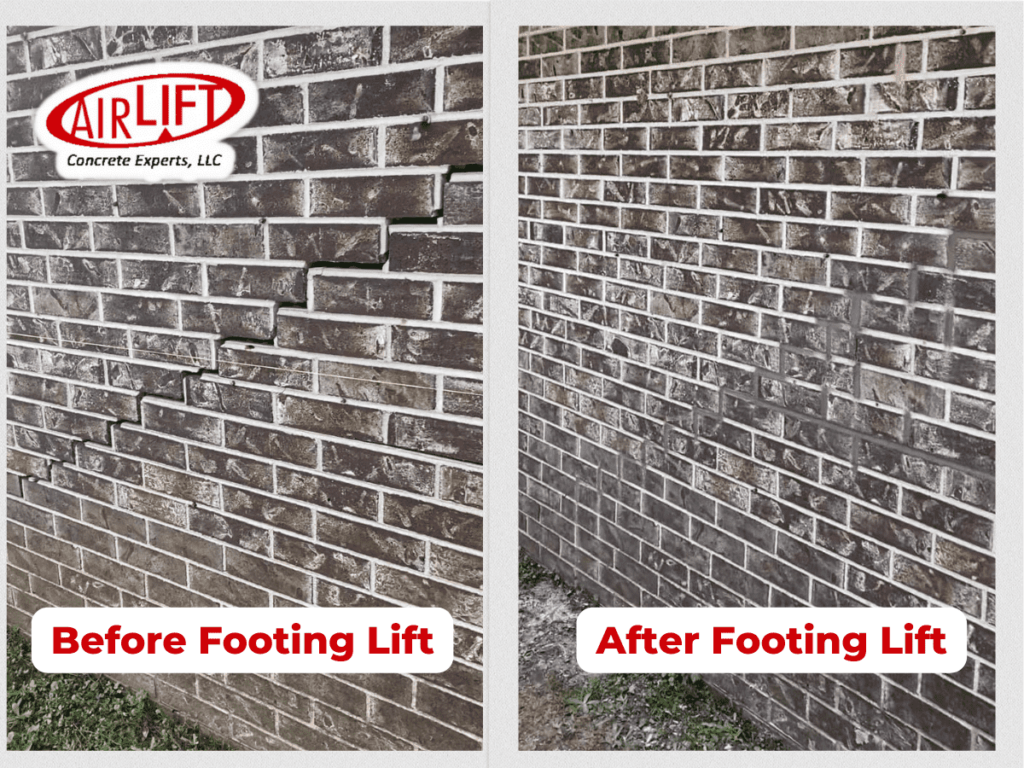
At Airlift Concrete Experts, we use a geotechnical closed-cell structural polyurethane foam. We inject the foam into the ground beneath sunken concrete, and it expands to fill the space. As it cures, the foam becomes rigid, providing lift and stability. (Read about the benefits of polyurethane foam injections.)
Everybody has seen the videos where structural foam is used to raise concrete slabs: sidewalks, pool decks, patios, and interior house slabs. These are prime examples of the type of work that we do every day.
One of the things we’ve been told for years is “You can’t raise footings with just foam.” For most of the industry, that’s true. However, we were given the opportunity to use polyurethane lifting on our first footings in 2018 – and the venture was successful. At that time, we watched and waited to see how well the process would hold up and how much we could raise the footings.
Since that time, we’ve extensively tested different tools and techniques and determined the best practices along with the equipment to use so that we can offer polyurethane foam lifting more widely. We have had great success raising footings with structural polyurethane. We can raise everything from smaller structures like garages to larger homes, businesses, and even churches.
The foundation is essential to your home’s stability, and a large part of what keeps it stable is the footing. Footings are in direct contact with the ground beneath your home, and any weakness in that soil can cause settling.
Poor soil conditions, erosion, or water issues are often the top culprits of why your home is sinking. If your foundation settles, you may notice cracking in your foundation floors and walls, as well as drywall cracks and sticking or loose doors and windows.
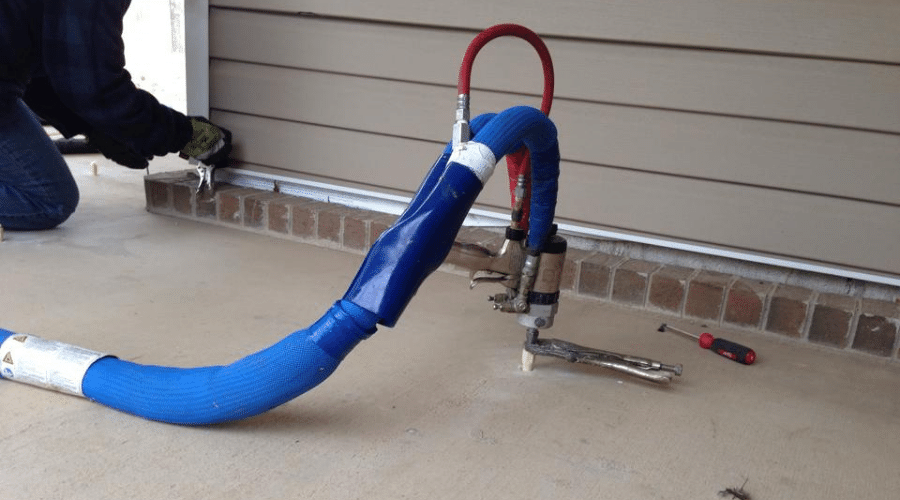
Houses don’t come with preconstruction piers, so why install them now? Expensive foundation piers only guarantee a stabilization, while at Airlift Concrete Experts, we guarantee not only stabilization, but also lifting your foundation.
Piers drive steel to a harder strata to support your house or building on stilts. Polyurethane uses the soil your home was initially built on to raise it, and we keep that load spread out on the footing.
Structural polyurethane is more affordable than piers, and the only thing that breaks it down is sunlight. We can strengthen the soils under your home’s original footings and raise the footing back into place.
In addition to guaranteeing a lift, we measure and track all movement. We ensure that repairing your most valuable investment is not a guessing game.
One benefit of using polyurethane foam lifting for your foundation repair is the time it takes to restore your foundation to its original level. We can typically lift a foundation in a single day. Not only is the actual foam injection process quick, but the foam product also cures quickly. Additionally, because polyurethane foam only requires minor injection points, we don’t have to tear out landscaping or cause significant disturbance to your property, unlike more invasive techniques, such as foundation piering.
Many factors will impact the cost of repairing a sinking foundation. Every situation is unique, but two major considerations are the size of the home and the extent of the foundation’s settlement. Using polyurethane foam to raise your home’s foundation can be substantially less expensive than installing more traditional foundation piers.
Overall, using polyurethane foam to lift your foundation is a versatile and cost-effective solution for repairing foundation sinking.
Concrete Experts offers free consultations to provide you with project-specific cost estimates for your home or business.
Contact us today to learn more or schedule your FREE estimate.
Get more details about using polyurethane foam to lift your foundation in this article.

 Call Now