

Grain bins are a major investment for any farming operation. They protect harvests, support daily operations, and play a critical role in on-farm safety. Because of their size and the extreme weight they carry, grain bins rely heavily on a stable, level foundation. When that foundation begins to settle or sink, the consequences can extend far beyond cracked concrete.
Understanding the signs a grain bin is sinking can help owners and operators take action early—protecting their equipment, their grain, and the people who work around these structures every day.
Grain bin settlement is not uncommon, especially as bins age or increase in capacity. Several factors can contribute to foundation movement, including:
Even small shifts beneath a concrete pad can lead to noticeable problems if they are left unaddressed. For a deeper dive into why grain bins sink or settle, read this related article.
Knowing what to look for is the first step in preventing costly damage. Below are some of the most common grain bin sinking signs owners and operators should be aware of.
Cracks—especially widening, stair-step, or uneven cracks—often indicate that the soil beneath the slab is no longer providing uniform support.
A grain bin foundation should be level. If one side of the slab appears lower than the other or equipment no longer sits evenly, settlement may be occurring.
Visible gaps where the bin meets the foundation can signal movement. These openings can allow moisture, pests, and debris to enter the structure.
When a bin settles unevenly, doors and access points may begin sticking, rubbing, or failing to close properly.
Even a slight lean is a serious red flag. Grain bins are designed to sit plumb, and any noticeable tilt should be evaluated immediately.
Anchor bolts help secure the bin to the foundation. If bolts appear loose, cracked, or pulled from the concrete, foundation movement may be the cause.
Sweep augers, unloading systems, or aeration equipment that suddenly operate poorly or unevenly may be responding to changes in floor elevation.
Ignoring early warning signs can lead to bigger problems over time. A sinking grain bin foundation can impact:
Addressing settlement early is often far more cost-effective than replacing an entire foundation.
Polyurethane foam lifting is a proven solution for correcting grain bin settlement without extensive excavation. The process involves injecting high-density foam beneath the concrete pad to:
Because the foam cures quickly and adds structural support, it is especially effective for high-load applications like grain bins.
Grain bin projects are not the same as standard concrete lifting jobs. The extreme weight, structural sensitivity, and safety concerns require specialized knowledge and equipment. Proper lifting must be done carefully and evenly to avoid stressing the bin walls or compromising the structure.
This is why working with an experienced contractor is critical.
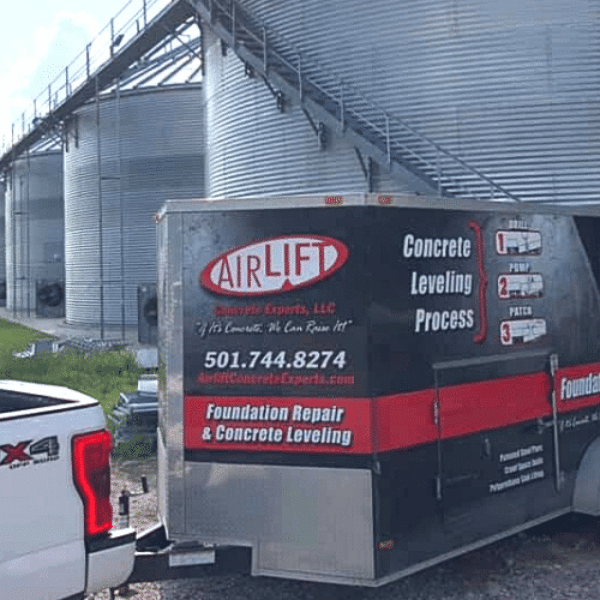
Airlift Concrete Experts specializes in polyurethane foam lifting for demanding applications, including grain bin foundations. With experience handling complex, high-load projects, Airlift understands the unique challenges grain bins present.
Because few contractors offer this specialized service, Airlift is willing to travel to help grain bin owners restore safety, stability, and peace of mind. Contact us today to discuss how we can help you restore your grain bin to level.
If you are noticing signs your grain bin is sinking—or want to address potential issues before they worsen—having a professional evaluation can help prevent costly repairs and protect your operation.

 Call Now